SainSmart ePA-CF 1.75mm Carbon Fiber Review (2026): A Spec-Based Look
As an Amazon Associate we earn from qualifying purchases. Links on this page are affiliate links.
This sainsmart 1 75mm black epa cf carbon review covers a spool of engineering-grade filament designed for demanding applications. The product is a 1KG roll of 1.75mm diameter ePA-CF filament. It combines 80% nylon with 20% carbon fiber to boost rigidity. This mixture aims to reduce warpage and shrinkage compared to standard nylon. The material offers high strength and heat resistance for functional parts. You need to manage print temperatures carefully, as it requires a hot end between 260°C and 290°C. The build plate should stay between 45°C and 80°C. This setup supports both professional and home 3D printers.
What stands out
- 80% nylon and 20% carbon fiber blend for high rigidity
- 1.75mm diameter with 1KG net weight per spool
- Lower shrink rate and reduced warpage compared to traditional nylon
- Optimal print temperatures range from 260°C to 290°C
- Recommended for use with stainless steel or hardened nozzles
Who it fits
Good fit for
You should choose this filament if you need strong, stiff parts that resist wear. It suits users making prosthetics, medical equipment, or complex costumes. The low shrinkage helps maintain dimensional stability for precise components. If you have an enclosed printer, you will get better layer adhesion. The material handles heat well, making it ideal for functional prototypes. You need a printer that can reach 290°C and a hardened nozzle to handle the abrasive fibers.
Who should skip it
Skip this option if you use a brass nozzle. The carbon fibers are abrasive and will wear out brass tips rapidly. You must upgrade to stainless steel or hardened alloys. Avoid this if your printer lacks an enclosure. Constant ambient temperature is needed for the best results. The material requires specific high temperatures that many basic printers cannot sustain. If you want easy printing without temperature management, look elsewhere. This is not for casual hobbyists with simple setups.
Verdict: This filament delivers high strength and rigidity for functional parts. You need an enclosed printer and a hardened nozzle to use it effectively.
Key specs explained for this filament
Material Type: ePA-CF
This code stands for enhanced polyamide filled with carbon fiber. You get a blend of 80% nylon and 20% carbon fiber. This mix improves rigidity and strength compared to standard nylon. It helps you print parts that resist wear and tear. Choose this if you need durable components for industrial or medical use. It offers better performance than basic thermoplastics for demanding projects.
Filament Diameter: 1.75mm
This is the standard thickness for most desktop 3D printers. It ensures smooth feeding into your extruder mechanism. If your printer accepts this size, you can use this spool without adapters. Compare this to 2.85mm filaments used in specific brands. Stick to 1.75mm for broad compatibility with popular home and pro printers. It is the most common size for reliable printing results.
Net Weight: 1KG
The spool contains one kilogram of material, which equals 2.2 pounds. This is a standard volume for hobbyist and professional printing. It allows you to produce several medium-sized parts before needing a refill. Check your printer build volume to estimate how many items you can make. This weight balances cost and utility for most users starting with engineering materials.
Compatible Material: Nylon
The base polymer is nylon, known for flexibility and toughness. This foundation provides impact resistance and low friction. You benefit from parts that can bend slightly without breaking. Nylon is harder to print than PLA or ABS due to moisture sensitivity. Use this spec to identify engineering-grade filaments. It signals that your prints will be functional and durable for mechanical applications.
Design and Build Specifications
The listing describes this material as ePA-CF, which stands for enhanced polyamide filled with carbon fiber. According to the listing, the blend consists of 80% nylon and 20% carbon fiber. This specific ratio is chosen to increase rigidity and overall strength. You get a filament that aims to handle more demanding mechanical tasks than standard nylon alone. The addition of carbon fiber helps reduce shrinkage and warping during the printing process. This stability is crucial for maintaining dimensional accuracy in complex parts.
You receive a 1KG spool, which equals 2.2 pounds of filament. The diameter is specified as 1.75mm, a standard size for most desktop 3D printers. The color is listed as black with a carbon fiber appearance. This finish provides a professional look suitable for industrial or functional prototypes. The packaging is designed to keep the filament dry and protected until you are ready to load it.
Printers using this filament require specific settings to achieve the best results. The listing recommends an optimal print temperature between 260°C and 290°C. You should set the build surface temperature to between 45°C and 80°C. Because carbon fiber is abrasive, the listing advises using hardened steel nozzles instead of brass. An enclosed printer is also recommended to maintain a constant ambient temperature. This setup helps ensure strong layer adhesion and prevents warping in large prints.
Setup and Everyday Use Guide
Preparing this filament for your printer requires specific thermal settings. The listing specifies optimal print temperatures between 260 and 290 degrees Celsius. You must also set your build surface temperature to a range of 45 to 80 degrees Celsius. These parameters are critical for achieving the dimensional stability and heat resistance the material promises. Because the blend contains 20% carbon fiber, the material is abrasive. This abrasion accelerates wear on standard brass nozzles. You should install a stainless steel or hardened alloy nozzle before loading the spool. This protects your hardware from rapid degradation.
Daily use involves managing the material’s shrink rate. The ePA-CF formula is designed to reduce warpage compared to traditional nylon. However, maintaining a constant ambient temperature is necessary for strong layer adhesion. You should print inside an enclosure or use an enclosed printer. This environment helps stabilize the temperature during the print cycle. The resulting parts offer high stiffness and resistance to wear. You can use these settings to create industrial components, prosthetics, or medical equipment. The filament works best when you respect its thermal requirements. It delivers functionality and strength for demanding jobs. Ensure your printer can sustain the high extrusion temperatures. Proper setup leads to a smooth print with a good surface finish. The 1.75mm diameter fits most standard 3D printers. Follow these guidelines to maximize the performance of this engineering-grade material.
Before You Buy This Filament
This ePA-CF nylon blend demands specific hardware for reliable results. The listing notes that carbon fibers are abrasive. They accelerate nozzle wear rapidly. You must use a hardened steel or stainless steel nozzle. Brass nozzles will degrade too quickly for consistent prints. Thermal management is critical for success. The material requires a constant ambient temperature to prevent warping. You should print in an enclosed chamber or use an enclosed printer. This setup helps maintain the necessary heat for proper layer adhesion. The listing suggests this filament suits industrial parts, prosthetics, and medical equipment. It offers high stiffness and heat resistance. Compare these requirements with your current printer setup. If your machine lacks enclosure or hardened nozzles, this material may not fit your workflow. Ensure your build plate adheres well at 45 to 80 degrees Celsius. Proper preparation is essential for strong, durable outputs.
Check before you buy
- Verify your printer has an enclosed chamber for temperature control.
- Install a hardened steel or stainless steel nozzle to prevent wear.
- Ensure your build plate reaches 45 to 80 degrees Celsius.
- Check that your printer handles 260 to 290 degrees Celsius.
The product at a glance
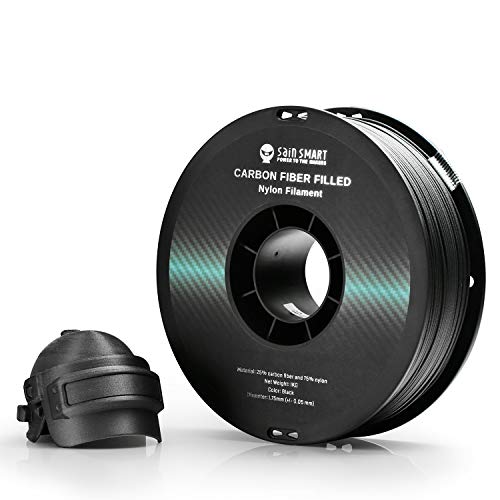
SainSmart ePA-CF 1.75mm Carbon Fiber Nylon
Best for: rigid, heat-resistant industrial parts
- Material Type
- ePA-CF
- Filament Diameter
- 1.75mm
- Net Weight
- 1KG
- Compatible Material
- Nylon
- Features
- Carbon Fiber
- Weight
- 2.2 pounds
View on Amazon: SainSmart ePA-CF 1.75mm Carbon Fiber Nylon Affiliate link
This SainSmart filament combines 80% nylon with 20% carbon fiber for high rigidity and strength. It measures 1.75mm in diameter and comes in a 1KG spool. The material offers lower shrinkage and warpage compared to standard nylon. It requires print temperatures between 260 and 290°C. You should use hardened nozzles due to abrasion. This spool suits users needing stiff, durable parts.
Pros
- 80% nylon and 20% carbon fiber blend for strength
- Lower shrink rate reduces warpage
- High rigidity and heat resistance
- Smooth printing with good surface finish
Cons
- Abrasive fibers accelerate brass nozzle wear
- Requires high print temperatures up to 290°C
- Benefits from enclosed printer for ambient heat
Good fit if
- You need strong, rigid industrial parts
- You have a hardened steel nozzle
- You require heat-resistant components
Skip if
- You only have a brass nozzle
- You cannot maintain high print temperatures
- You need flexible, non-rigid parts
Verdict: SainSmart ePA-CF Carbon Fiber Nylon Filament delivers high rigidity for demanding projects. It fits users with hardened nozzles who need stiff, heat-resistant parts.
Specifications side by side
| Spec | SainSmart ePA-CF 1.75mm Carbon Fiber Nylon |
|---|---|
| Material Type | ePA-CF |
| Filament Diameter | 1.75mm |
| Net Weight | 1KG |
| Compatible Material | Nylon |
| Features | Carbon Fiber |
| Weight | 2.2 pounds |
| Size | ePA-CF |
| Color | Carbon Fiber |
| Model | 4897075441762 |
Frequently asked questions
What is the best use case for SainSmart ePA-CF filament?
This material is designed for rigid, heat-resistant industrial parts. The blend of 80% nylon and 20% carbon fiber provides high stiffness. You should use it for demanding projects that require structural integrity. It is not ideal for flexible or decorative prints. The carbon fiber reinforcement ensures the final part maintains its shape under stress.
Does this filament require a hardened nozzle?
Yes, you must use a hardened steel or stainless steel nozzle. The 20% carbon fiber content is abrasive and will rapidly degrade standard brass nozzles. Using a soft nozzle will lead to quick wear and inconsistent extrusion. A hardened nozzle ensures longevity and reliable printing performance throughout the entire spool usage.
What print temperature range does this filament need?
You should set your hotend between 260 and 290 degrees Celsius. This higher temperature range ensures proper flow and layer adhesion for the ePA-CF blend. Standard PLA or ABS settings will not work correctly. Maintaining this thermal range helps achieve the intended rigidity and strength in your printed objects.
What build surface temperature is recommended?
Set your heated bed between 45 and 80 degrees Celsius. This range helps manage warping, which is common with nylon-based materials. The specific temperature depends on your adhesion method, such as glue stick or PEI sheets. Proper bed temperature ensures the first layer sticks well and stays flat during the print.
How much does a spool of this filament weigh?
Each spool weighs 2.2 pounds. This weight corresponds to a 1KG net content of filament. The packaging includes the spool weight, so the total shipping weight is higher. This standard size fits most common 3D printer filament holders and reels.
What is the composition of SainSmart ePA-CF?
The filament is an enhanced polyamide filled with carbon fiber. It consists of 80% nylon and 20% carbon fiber. This specific ratio is engineered to boost rigidity compared to pure nylon. The carbon fibers provide stiffness while the nylon matrix offers toughness and heat resistance.
Is this filament suitable for functional prototypes?
Yes, it is excellent for functional prototypes requiring strength. The high rigidity makes it suitable for parts that bear load. It is not recommended for flexible joints or aesthetic models. The carbon fiber gives a distinct texture and color. It is best for engineering applications where durability matters more than surface finish.