15 Best Grey 3d Printers, Compared
As an Amazon Associate we earn from qualifying purchases. Links on this page are affiliate links.
Selecting the right grey 3d printer requires matching machine capabilities directly to your typical fabrication projects. The Bambu Lab P2S High-Speed FDM Printer takes the top spot because it pairs 600 mm/s print speeds with an integrated 50 °C heated chamber for engineering-grade filaments.
We compared 15 options across the category, evaluating every machine strictly by the specifications published on manufacturer listings. This guide helps you decide whether a compact open bed, high-speed CoreXY layout, or fully enclosed heated frame best matches your workflow.
Quick picks
The best fit for you
- You want fast printing for engineering-grade filaments Bambu Lab P2S High-Speed FDM Printer Its 50 °C heated chamber and 600 mm/s speed support high-temp engineering plastics in a grey enclosure.
- You want high-speed CoreXY motion with quick maintenance FLASHFORGE AD5M CoreXY 3D Printer Its CoreXY architecture provides 600 mm/s motion speeds alongside quick-release nozzle hardware.
- You want a compact pre-assembled printer for small desks HEPHI3D TINA2 Mini 3D Printer Its 8.27-inch base dimensions and 5.69-pound weight deliver auto-leveling in an ultra-compact footprint.
- You need active chamber heating for technical composites QIDI Max4 Large Enclosed 3D Printer Its actively heated chamber and 800 mm/s print speed support demanding high-temperature composite filaments.
Our 15 picks

Bambu Lab P2S High-Speed FDM Printer
Best for: fast single-filament and engineering-grade printing
- Color
- Grey (what this guide is about)
- Print Speed
- 600 mm/s
- Printing Technology
- FDM
- Extruder Type
- PMSM Servo Extruder
- Chamber Heating
- 50 °C
- Target Audience
- Beginners
The Bambu Lab P2S High-Speed FDM 3D Printer is an enclosed grey unit built for beginners and rapid prototyping. It prints at speeds up to 600 mm/s using a PMSM servo extruder and active flowrate compensation. Its adaptive airflow manages an internal chamber temperature up to 50 °C with carbon air filtration. You get automatic calibration and setup within 15 minutes, making it suitable if you want fast, dependable single-filament printing.
Pros
- Print speeds up to 600 mm/s with active flowrate compensation
- Adaptive airflow system maintains chamber temperatures up to 50 °C
- Automatic calibration, AI failure detection, and quick-swap nozzles
- Integrated carbon filter for chamber exhaust
Cons
- Base standalone unit does not support multi-color printing without the separate Combo package
- Footprint requires 21 by 18 inches of desk space
Good fit if
- You want high-speed printing up to 600 mm/s with automated bed calibration.
- You plan to print engineering materials requiring an enclosed 50 °C chamber.
Skip if
- You need multi-color printing out of the box without upgrading to the Combo bundle.
- You have a compact workbench unable to fit an 18-by-21-inch machine footprint.
Verdict: Bambu Lab P2S High-Speed FDM 3D Printer delivers 600 mm/s speeds, automated setup, and a 50 °C heated chamber for engineering materials in a single grey enclosure. It is an optimal choice if you prioritize speed and automated calibration over out-of-the-box multi-color capability.

Bambu Lab A1 FDM 3D Printer
Best for: Beginners wanting automated calibration and speed
- Color
- Grey (what this guide is about)
- Printing Technology
- FDM
- Leveling Type
- Full-Auto Calibration
- Target Audience
- Beginners, Kids
- Dimensions
- 21.8 × 20.8 × 12.9 inches
- Weight
- 22 pounds
The Bambu Lab A1 FDM 3D Printer provides a grey desktop setup designed for beginners and kids. You get up to 10,000 mm/s² acceleration paired with full-auto calibration for Z-offset and bed leveling. It features active flow rate compensation, active motor noise canceling, and a 1-clip quick swap nozzle. Multi-color printing is supported, but you must acquire the AMS lite module separately to use more than one filament.
Pros
- Up to 10,000 mm/s² acceleration
- Full-auto calibration handles Z-offset and bed leveling
- Active flow rate compensation maintains extrusion accuracy
- Tool-free 1-clip quick swap nozzle system
- Active motor noise canceling for quiet operation
Cons
- Multi-color printing requires buying the AMS lite separately
- Requires 21.76 by 20.83 inches of surface space
Good fit if
- You want automated bed leveling and Z-offset calibration.
- You need acceleration speeds up to 10,000 mm/s².
- You prefer a tool-free nozzle swap system for easy maintenance.
Skip if
- You want multi-color printing included directly out of the box.
- You have a small workspace that cannot fit a 21.76-inch long machine.
Verdict: Bambu Lab A1 FDM 3D Printer delivers high-speed printing with full-auto calibration and active flow rate compensation. It offers a capable grey FDM system, though multi-color printing requires an add-on unit.

Anycubic Kobra X Multicolor 3D Printer
Best for: high-speed multi-color printing on a desktop
- Color
- Grey (what this guide is about)
- Build Volume
- 260mm x 260mm x 260mm
- Print Speed
- 600mm/s
- Multicolor Capacity
- 4 colors, up to 19 colors
- Leveling Type
- LeviQ 3.0, 49-point auto bed leveling
- Extruder Type
- Hardened steel nozzle
The Anycubic Kobra X Multicolor 3D Printer is a grey FDM printer designed for multi-color output. You get native four-color printing capability, a 260 x 260 x 260 mm build volume, and maximum print speeds reaching 600 mm/s. A 300°C hardened steel nozzle enables compatibility with materials like PLA, PETG, and ASA. It suits makers who need multi-filament setups and automated bed leveling without extensive manual calibration.
Pros
- Native 4-color printing support expandable up to 19 colors with extra units
- 260 x 260 x 260 mm build volume with LeviQ 3.0 49-point auto bed leveling
- Hardened steel nozzle handles up to 300°C for technical filaments
- Top print speed up to 600 mm/s with integrated vibration compensation
Cons
- Filament spools are not included in the package
- Incompatible with older ACE Pro material units
Good fit if
- You want native multi-color printing capability directly from the machine.
- You need high-temperature nozzle support up to 300°C for materials like ASA.
- You prefer automated 49-point bed calibration over manual leveling.
Skip if
- You already own original ACE Pro units and expect backward compatibility.
- You require starter filament spools packed inside the box.
Verdict: Anycubic Kobra X Multicolor 3D Printer delivers fast multi-color capability with a 260 mm cube volume and a 300°C hardened steel nozzle. It is a practical choice if you need out-of-the-box multi-filament production with automated calibration.

FLASHFORGE AD5M CoreXY 3D Printer
Best for: high-speed CoreXY printing and quick nozzle swaps
- Color
- Grey (what this guide is about)
- Build Volume
- 220 x 220 x 220 mm
- Print Speed
- Max 600 mm/s
- Leveling Type
- Fully automatic one-click leveling
- Motion Structure
- CoreXY
- Extruder Type
- Quick-release nozzle
The Flashforge 5M CoreXY 3D Printer is a grey, high-speed machine built on an all-metal CoreXY frame. It reaches print speeds up to 600 mm/s and features one-click fully automatic calibration to set nozzle offsets without manual tools. You also get a tool-free quick-release nozzle system and a double-sided PEI build plate. It suits you if you want fast printing speeds, reliable remote app monitoring, and quick nozzle changes.
Pros
- Maximum print speed of 600 mm/s on an all-metal CoreXY structure
- Fully automatic one-click leveling and offset calibration
- Tool-free quick-release nozzle system
- Flexible double-sided PEI steel plate with a dedicated PETG side
- Power-loss resume print function
Cons
- No multi-color or material switching unit included
- Open-frame construction without a built-in enclosure
Good fit if
- You want high-speed printing up to 600 mm/s on a CoreXY frame.
- You prefer hands-off bed leveling without manual calibration tools.
- You frequently swap nozzle sizes for different detail levels.
Skip if
- You need an enclosed build chamber for temperature-sensitive materials.
- You require multi-color printing capabilities out of the box.
Verdict: Flashforge 5M CoreXY 3D Printer pairs 600 mm/s motion speeds with fully automatic leveling and quick-release nozzle hardware. It is a capable grey option if you prioritize CoreXY stability and fast maintenance over enclosed multi-color setups.

Entina Tina2 Basic Mini 3D Printer
Best for: beginners needing a compact, ready-to-run desktop printer
- Color
- Grey (what this guide is about)
- Build Volume
- 100x105x100mm
- Printing Technology
- FDM
- Leveling Type
- Auto Leveling
- Features
- Fully Assembled
- Target Audience
- Beginners, Kids
The Entina Tina2 Basic is a compact grey 3D printer designed for beginners and desktop workspaces. It arrives fully assembled with automatic bed leveling and a dual Z-axis setup for stability. You get a 100 x 105 x 100 mm build volume, a removable magnetic build plate, and a 2.4-inch LCD screen controlled by a knob. It suits you if you need a lightweight, ready-to-run machine for small crafts.
Pros
- Arrives fully assembled and ready to print
- Automatic bed leveling with a flexible magnetic build plate
- Dual Z-axis rails designed to improve printing stability
- Resume printing support following power interruptions
Cons
- Small 100 x 105 x 100 mm build volume
- Uses MicroSD card offline transfer without wireless connectivity listed
Good fit if
- You want a fully assembled desktop printer with automated bed leveling.
- You only plan to print small items within a 100 x 105 x 100 mm volume.
Skip if
- You need a larger print area for bigger objects.
- You prefer built-in Wi-Fi or networked file transfers over MicroSD cards.
Verdict: Entina Tina2 Basic Mini 3D Printer delivers an entry-level printing setup with automatic leveling, dual Z-axis rails, and a compact desktop footprint. It offers a straightforward option if you only require a small build volume for basic prints.
HEPHI3D TINA2 Mini 3D Printer
Best for: beginners seeking a compact, pre-assembled grey printer
- Color
- Grey (what this guide is about)
- Leveling Type
- Auto-leveling
- Features
- Fully Assembled
- Target Audience
- Beginners
- Dimensions
- 8.27 × 8.27 × 11.4 inches
- Weight
- 5.69 pounds
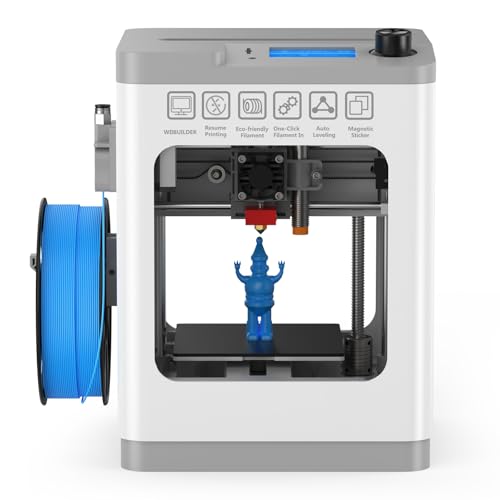
The HEPHI3D Tina2 Mini 3D Printer is a compact grey desktop machine designed for beginners. It arrives fully assembled with a 2.4-inch LCD screen, dual Z-axis and dual Y-axis rails, and one-touch auto bed leveling. Measuring 8.27 by 8.27 by 11.42 inches and weighing under six pounds, it fits easily into tight workspaces. If you need a straightforward printer for PLA, PLA Pro, and TPU projects, this small-footprint unit provides ready-to-use operation.
Pros
- Fully assembled out of the box with a 2.4-inch LCD screen
- One-touch auto bed leveling
- Dual Z-axis and dual Y-axis rails for stability
- Removable flexible magnetic build plate
- Resume printing sensor for power outages
Cons
- Prints only via TF card or USB cable without wireless options
- Supported materials limited to PLA, PLA Pro, and TPU
- Small frame dimensions constrain overall build volume
Good fit if
- You want a fully assembled grey printer with automatic bed leveling.
- You need a lightweight unit weighing under six pounds for compact spaces.
- You plan to slice with open-source software and print via TF card or USB.
Skip if
- You require wireless connectivity or network printing.
- You need to print high-temperature materials beyond PLA and TPU.
- You need a large build volume for oversized prints.
Verdict: HEPHI3D Tina2 Mini 3D Printer delivers accessible, fully assembled desktop printing with dual-axis rails and auto-leveling. It serves as a dependable choice for entry-level makers working with PLA or TPU on small desks.

Anycubic Kobra X Multicolor 3D Printer
Best for: multi-color prints and expandable filament setups
- Color
- Grey (what this guide is about)
- Build Volume
- 260mm x 260mm x 260mm
- Printing Technology
- FDM
- Multicolor Capacity
- Native 4-color, up to 19 colors
- Leveling Type
- LeviQ 3.0
- Dimensions
- 17.9 × 17.5 × 18.2 inches
This grey Anycubic Kobra X is an FDM 3D printer featuring a 260 x 260 x 260 mm build volume and native four-color printing. You can expand material handling up to 19 colors using four ACE 2 Pro units. It includes LeviQ 3.0 49-point auto-leveling, a top-mounted spool design, and an integrated 720p AI monitoring camera. It suits makers who need multi-color production and automated bed leveling in a compact benchtop footprint.
Pros
- Native 4-color printing with expansion up to 19 colors via 4 ACE 2 Pro units
- LeviQ 3.0 precision 49-point auto-leveling mesh
- 260 x 260 x 260 mm build volume with space-saving top-mount spool architecture
- Built-in 720p AI camera with spaghetti detection and failure prevention
Cons
- Integrated camera resolution is limited to 720p
- Expanding beyond 4 colors requires additional ACE 2 Pro hardware
Good fit if
- You need native 4-color printing with an upgrade path up to 19 colors.
- You want automated 49-point bed leveling with zero manual compensation.
- You need built-in AI monitoring and app-based fleet management.
Skip if
- You require an integrated camera with resolution above 720p.
- You need a build volume exceeding 260 x 260 x 260 mm.
Verdict: Anycubic Kobra X Multicolor 3D Printer delivers native four-color capability and 49-point auto-leveling across a 260 x 260 x 260 mm build area. Its integrated 720p camera and 19-color expansion path support varied multi-filament projects.

ANYCUBIC Kobra X Multicolor 3D Printer
Best for: high-speed multi-color printing at home
- Color
- Grey (what this guide is about)
- Build Volume
- 260x260x260mm
- Print Speed
- 600mm/s
- Printing Technology
- FDM
- Multicolor Capacity
- 4-color, up to 19 colors
- Leveling Type
- LeviQ 3.0
The Anycubic Kobra X is a grey multi-material FDM printer featuring a 260 x 260 x 260 mm build space and print speeds up to 600 mm/s. It includes native 4-color support, expandable up to 19 colors using add-on units. With a 300°C hardened steel nozzle, 49-point auto-leveling, and an integrated 720p AI monitoring camera, you receive high-temperature filament support and automated calibration for your workspace.
Pros
- Maximum print speed of 600 mm/s with vibration compensation
- 260 x 260 x 260 mm build volume with 300°C hardened steel nozzle
- LeviQ 3.0 49-point automatic bed leveling
- Integrated 720p AI camera with spaghetti and object detection
- Quiet operation rated at or below 48 dB
Cons
- Expanding beyond 4 colors requires purchasing extra ACE 2 Pro units
- Integrated camera resolution is limited to 720p
Good fit if
- You want multi-color printing support out of the box.
- You need to print with high-temperature materials like ASA alongside PLA and TPU.
- You prefer automated 49-point bed leveling and low noise output.
Skip if
- You need an enclosed heated chamber for specialized industrial filaments.
- You require high-definition video monitoring above 720p resolution.
Verdict: Anycubic Kobra X Multicolor 3D Printer delivers high-speed multi-filament production with reliable automated calibration and AI monitoring. Its 300°C nozzle and low acoustic output make it a solid choice for multi-color makers.

QIDI Max4 Large Enclosed 3D Printer
Best for: large-scale technical and high-temperature composite printing
- Color
- Grey (what this guide is about)
- Build Volume
- 390×390×340mm
- Print Speed
- 800mm/s
- Multicolor Capacity
- 16-color
- Extruder Type
- Hardened steel nozzle
- Chamber Heating
- 65℃
The QIDI Max4 is a large-format enclosed 3D printer built in a grey finish. It provides an expansive 390×390×340 mm build volume alongside a 65℃ active heated chamber and a high-flow hardened steel nozzle reaching speeds up to 800 mm/s. If you need to print large prototypes or engineering materials like carbon-fiber blends in one continuous run, this high-capacity machine gives you the structural thermal control required.
Pros
- Spacious 390×390×340 mm build volume for large parts
- Active 65℃ heated chamber for high-temperature filaments
- Print speeds up to 800 mm/s with 30,000 mm/s² acceleration
- Built-in AI camera for automated failure detection
Cons
- Heavy 110-pound weight with a large 28×28×30-inch footprint
- Polar Cooler system must be purchased separately
- Multi-color support requires purchasing an external QIDI BOX
Good fit if
- You need to manufacture large functional models in one piece up to 390×390×340 mm.
- You frequently print technical materials like ABS-CF, PC, or PPS-CF that require an active 65℃ heated chamber.
- You want high-speed closed-loop motor motion paired with integrated AI print failure monitoring.
Skip if
- You have a small workbench unable to support a 110-pound machine measuring 28 inches deep.
- You expect out-of-the-box multicolor printing without purchasing add-on hardware.
Verdict: QIDI Max4 Large Heated Chamber 3D Printer delivers industrial build capacity and dedicated active heating for complex composite parts. Its 800 mm/s maximum speed and rigid enclosure make it a powerful choice if you have the dedicated floor or desk space.

ANYCUBIC Kobra X Multicolor 3D Printer
Best for: quiet, multi-color home printing projects
- Color
- Grey (what this guide is about)
- Build Volume
- 260mm x 260mm x 260mm
- Multicolor Capacity
- Native 4-color
- Leveling Type
- LeviQ 3.0, 49-point auto-leveling
- Motion Structure
- XYZ gantry
- Features
- High Speed
The Anycubic Kobra X Multicolor 3D Printer is a grey desktop machine designed for multi-material output. It provides a 260 x 260 x 260 mm build volume and native four-color printing via automated color swaps. You also get 49-point LeviQ 3.0 auto-leveling and a 45dB operating noise level. Integrated 720P camera monitoring watches for errors, making it a practical option if you want automated multicolor capability in shared living spaces.
Pros
- Native four-color printing with automated color swapping
- LeviQ 3.0 auto-leveling with 49-point 0.02mm accuracy
- Quiet 45dB operating noise level
- Built-in 720P AI camera for spaghetti and object detection
Cons
- Requires 15-minute modular assembly before first use
- Camera resolution is limited to 720P
Good fit if
- You want native four-color printing without manual filament changes.
- You need a quiet 45dB machine for shared home environments.
- You want automated bed leveling and AI-based print error detection.
Skip if
- You require a fully pre-assembled unit with zero setup time.
- You need higher than 720P resolution for remote print monitoring.
Verdict: Anycubic Kobra X Multicolor 3D Printer delivers native four-color switching, 49-point auto-leveling, and quiet 45dB operation in a 260 x 260 x 260 mm volume. It provides automated multi-filament production supported by integrated AI camera monitoring.

QIDI Q2C High-Speed CoreXY 3D Printer
Best for: High-temperature composite printing at rapid speeds
- Color
- Grey (what this guide is about)
- Build Volume
- 270x270x256mm
- Print Speed
- 600mm/s
- Multicolor Capacity
- Up to 16-color
- Leveling Type
- Auto-leveling
- Motion Structure
- CoreXY
The QIDI Q2C is an enclosed grey CoreXY 3D printer engineered for engineering-grade materials and fast output. It features a 370°C bimetal hotend, a 270 x 270 x 256 mm build volume, and print speeds reaching up to 600mm/s. Built on an open-source framework with linear rails and automatic bed leveling, it suits you if you want high-temperature filament support like PPS-CF without complex assembly.
Pros
- 370°C bimetal hotend supports composite filaments such as PPS-CF
- CoreXY motion structure and linear rails enable speeds up to 600mm/s
- Nozzle-integrated sensor provides fully automatic bed leveling
- Open-source architecture allows customizable firmware and software settings
Cons
- Lacks an active chamber heating function
- Monitoring camera is an optional add-on and does not support AI detection
- Multi-color printing and tangle detection require the separate QIDI BOX
Good fit if
- You want to print high-temperature composites like carbon-fiber blends at up to 370°C
- You need a fast CoreXY enclosed machine with a 270 x 270 x 256 mm build volume
- You prefer an open-source platform that allows full control over printing parameters
Skip if
- You require an actively heated build chamber for warping-sensitive filaments
- You want integrated AI camera monitoring out of the box
- You need native multi-color printing without purchasing external accessories
Verdict: QIDI Q2C High-Speed CoreXY 3D Printer delivers capable 370°C composite printing and 600mm/s speed within a rigid enclosed frame. It offers high-temp flexibility for technical projects, provided you do not require active chamber heating.

Anycubic Kobra 4 Combo Multicolor 3D Printer
Best for: quiet multi-color printing in shared home offices
- Color
- Grey (what this guide is about)
- Multicolor Capacity
- 4 colors (expandable to 8)
- Leveling Type
- Intelligent auto-leveling
- Dimensions
- 17.9 × 17.9 × 18.2 inches
- Weight
- 30 pounds
View on Amazon: Anycubic Kobra 4 Combo Multicolor 3D Printer
The Anycubic Kobra 4 Combo is a grey gantry-style 3D printer bundled with an ACE 2 Pro unit for native four-color printing. Measuring 17.93 by 17.93 by 18.16 inches and weighing 29.98 pounds, it operates at a quiet 48dB level. Equipped with intelligent auto-leveling and remote control via phone or PC, this setup suits you if you need multi-material capability directly on your desk.
Pros
- Native four-color printing out of the box with ACE 2 Pro
- Quiet 48dB operating volume
- Intelligent auto-leveling for first-layer consistency
- Phone and PC app remote control and print management
Cons
- Expanding to eight colors requires a second ACE 2 Pro box
- Color capacity caps at a maximum of eight colors
- Heavy frame weighing 29.98 pounds
Good fit if
- You want native four-color printing capability out of the box.
- You work in a shared space that requires a quiet 48dB operating level.
- You prefer monitoring and starting prints remotely from a PC or mobile device.
Skip if
- You require simultaneous printing with more than eight colors.
- You need a lightweight, portable machine under 25 pounds.
Verdict: Anycubic Kobra 4 Combo Multicolor 3D Printer provides automated multi-filament fabrication with low 48dB noise levels and simple remote monitoring. It gives you an integrated multi-color workflow without complex manual calibration.

HeyGears UltraCraft Pulsing Release Module
Best for: HeyGears Reflex owners using technical resins
- Color
- Grey (what this guide is about)
- Dimensions
- 12.2 × 5.83 × 9.25 inches
- Weight
- 2.2 pounds
The HeyGears UltraCraft Pulsing Release Module is a grey resin printing accessory designed for Reflex, Reflex RS, and Reflex RS Turbo printers. It reduces peeling force by roughly 50 percent, allowing you to print overhang angles down to 15 degrees with 20 to 60 percent fewer supports. If you use compatible HeyGears systems and want lower resin waste with reduced finishing time on intricate parts, this module enhances your existing setup.
Pros
- Reduces peeling force by approximately 50 percent
- Enables overhang angles down to 15 degrees
- Lowers support material demand by 20 to 60 percent
- Required for PAC10, PAE10, and PAU20 high-performance resins
Cons
- Requires a Pulsing Release Resin Tank sold separately
- Not compatible with PAWW10 and PAWW20 water-washable resins
- Not recommended for models with walls 3 mm thick or thinner
Good fit if
- You own a HeyGears Reflex, Reflex RS, or Reflex RS Turbo printer.
- You print with high-performance resins like PAC10, PAE10, or PAU20.
- You want to print overhang angles down to 15 degrees with fewer supports.
Skip if
- You print parts with wall thicknesses of 3 mm or thinner.
- You rely on PAWW10 or PAWW20 water-washable resins.
- You need a standalone 3D printer rather than an add-on module.
Verdict: HeyGears UltraCraft Pulsing Release Module upgrades compatible Reflex resin printers by cutting peeling force in half and reducing support requirements. It is a specialized add-on suited for technical resin printing rather than standalone operation.
Anycubic Kobra 4 Auto-Leveling 3D Printer
Best for: Everyday PLA and PETG hobby printing
- Color
- Grey (what this guide is about)
- Leveling Type
- LeviQ 3.0 Auto Leveling
- Dimensions
- 17.9 × 17.9 × 18.2 inches
- Weight
- 21.8 pounds
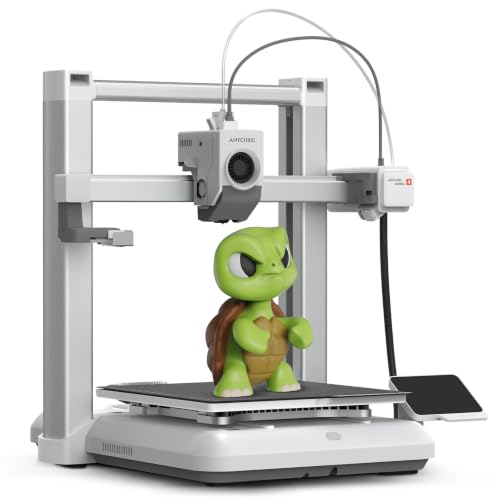
The Anycubic Kobra 4 Auto-Leveling 3D Printer is a grey FDM machine designed for straightforward workshop and home fabrication. It measures 17.93 by 17.93 by 18.16 inches and weighs 21.8 pounds. Key hardware features include smart LeviQ 3.0 automatic bed leveling and structural reinforcement for stable motion control. It lists official compatibility with PLA and PETG filaments, making it suitable if you want reliable daily output without manual bed leveling.
Pros
- LeviQ 3.0 automatic bed leveling compensates for uneven surfaces
- Reinforced motion system paired with optimized cooling
- Native material support for standard PLA and PETG filaments
- Compact grey frame measuring 17.93 by 17.93 inches at the base
Cons
- Material compatibility listed only for PLA and PETG
- Base unit lacks multi-color hardware included with combo variants
Good fit if
- You print primarily with standard PLA or PETG filaments.
- You want automatic first-layer calibration via LeviQ 3.0.
- You need a grey desktop printer under 22 pounds.
Skip if
- You require multi-color filament feeding out of the box.
- You plan to print high-temperature materials beyond PLA and PETG.
Verdict: Anycubic Kobra 4 Auto-Leveling 3D Printer delivers dependable PLA and PETG output using automated LeviQ 3.0 bed compensation. Its grey frame and reinforced motion hardware make it a practical tool for daily maker projects.

Bambu Lab AMS Lite 4-Spool Material System
Best for: four-spool multi-material feeding on compatible printers
- Color
- Grey (what this guide is about)
- Multicolor Capacity
- Up to 4 colors
- Dimensions
- 18.1 × 12.5 × 11.5 inches
- Weight
- 3.53 pounds
The Bambu Lab AMS Lite 4-Color Material System is a grey multi-filament accessory rather than a standalone 3D printer. It adds four spool slots to your compatible machine, supporting four-color prints, dissolvable support materials, and automatic spool backup when filament runs out. Integrated RFID readers automatically configure settings with supported spools, while the exposed, translucent body weighs 3.53 pounds and measures 18.14 by 12.48 by 11.51 inches.
Pros
- Holds up to four filament spools for multi-color printing
- Automatic spool backup switches feeds when filament runs out
- Built-in RFID identifies compatible spools and print settings automatically
- Translucent exposed body allows direct visual monitoring and maintenance
Cons
- Requires a separate compatible 3D printer to operate
- Exposed body does not enclose or seal spools from ambient air
- Capacity is limited to four filament spools at a time
Good fit if
- You need four-spool multi-color or multi-material feeding for your compatible printer.
- You want automatic spool switching to prevent runout interruptions during long jobs.
- You prefer an open, translucent design for direct access during maintenance.
Skip if
- You need a complete, standalone 3D printer rather than an add-on material feeder.
- You require fully enclosed filament storage to protect spools from moisture.
Verdict: Bambu Lab AMS Lite 4-Color Material System provides four-spool switching, RFID detection, and automatic runout protection for compatible setups. It serves as an open-frame feeding accessory rather than an independent printing unit.
Specifications side by side
| Spec | Bambu Lab P2S High-Speed FDM Printer | Bambu Lab A1 FDM 3D Printer | Anycubic Kobra X Multicolor 3D Printer | FLASHFORGE AD5M CoreXY 3D Printer | Entina Tina2 Basic Mini 3D Printer | HEPHI3D TINA2 Mini 3D Printer | Anycubic Kobra X Multicolor 3D Printer | ANYCUBIC Kobra X Multicolor 3D Printer | QIDI Max4 Large Enclosed 3D Printer | ANYCUBIC Kobra X Multicolor 3D Printer | QIDI Q2C High-Speed CoreXY 3D Printer | Anycubic Kobra 4 Combo Multicolor 3D Printer | HeyGears UltraCraft Pulsing Release Module | Anycubic Kobra 4 Auto-Leveling 3D Printer | Bambu Lab AMS Lite 4-Spool Material System |
|---|---|---|---|---|---|---|---|---|---|---|---|---|---|---|---|
| Build Volume | not specified | not specified | 260mm x 260mm x 260mm | 220 x 220 x 220 mm | 100x105x100mm | not specified | 260mm x 260mm x 260mm | 260x260x260mm | 390×390×340mm | 260mm x 260mm x 260mm | 270x270x256mm | not specified | not specified | not specified | not specified |
| Print Speed | 600 mm/s | not specified | 600mm/s | Max 600 mm/s | not specified | not specified | not specified | 600mm/s | 800mm/s | not specified | 600mm/s | not specified | not specified | not specified | not specified |
| Printing Technology | FDM | FDM | not specified | not specified | FDM | not specified | FDM | FDM | not specified | not specified | not specified | not specified | not specified | not specified | not specified |
| Multicolor Capacity | not specified | not specified | 4 colors, up to 19 colors | not specified | not specified | not specified | Native 4-color, up to 19 colors | 4-color, up to 19 colors | 16-color | Native 4-color | Up to 16-color | 4 colors (expandable to 8) | not specified | not specified | Up to 4 colors |
| Leveling Type | not specified | Full-Auto Calibration | LeviQ 3.0, 49-point auto bed leveling | Fully automatic one-click leveling | Auto Leveling | Auto-leveling | LeviQ 3.0 | LeviQ 3.0 | not specified | LeviQ 3.0, 49-point auto-leveling | Auto-leveling | Intelligent auto-leveling | not specified | LeviQ 3.0 Auto Leveling | not specified |
| Motion Structure | not specified | not specified | not specified | CoreXY | not specified | not specified | not specified | not specified | not specified | XYZ gantry | CoreXY | not specified | not specified | not specified | not specified |
| Extruder Type | PMSM Servo Extruder | not specified | Hardened steel nozzle | Quick-release nozzle | not specified | not specified | not specified | hardened steel nozzle | Hardened steel nozzle | not specified | not specified | not specified | not specified | not specified | not specified |
| Chamber Heating | 50 °C | not specified | not specified | not specified | not specified | not specified | not specified | not specified | 65℃ | not specified | not specified | not specified | not specified | not specified | not specified |
| Color Printing | not specified | not specified | Multi-Color | not specified | not specified | not specified | not specified | Multi-Color | not specified | not specified | not specified | not specified | not specified | not specified | not specified |
| Structure | not specified | not specified | not specified | CoreXY | not specified | not specified | not specified | not specified | not specified | not specified | not specified | not specified | not specified | not specified | not specified |
| Leveling | not specified | not specified | not specified | not specified | Auto Leveling | not specified | not specified | not specified | not specified | Auto Leveling | not specified | not specified | not specified | Auto Leveling | not specified |
| Features | not specified | not specified | not specified | not specified | Fully Assembled | Fully Assembled | not specified | not specified | Heated Chamber | High Speed | High Speed | not specified | not specified | not specified | not specified |
| Target Audience | Beginners | Beginners, Kids | not specified | not specified | Beginners, Kids | Beginners | not specified | not specified | not specified | not specified | not specified | not specified | not specified | not specified | not specified |
| Color | Grey | Grey | Grey | Grey | Grey | Grey | Grey | Grey | Grey | Grey | Grey | Grey | Grey | Grey | Grey |
| Dimensions | 18 × 21 × 18 inches | 21.8 × 20.8 × 12.9 inches | 23 × 13 × 22 inches | 15.8 × 14.3 × 17.6 inches | 11.4 × 8.6 × 8.6 inches | 8.27 × 8.27 × 11.4 inches | 17.9 × 17.5 × 18.2 inches | 17.9 × 17.5 × 18.2 inches | 28 × 28 × 30 inches | 17.9 × 17.5 × 18.2 inches | 19 × 21 × 23 inches | 17.9 × 17.9 × 18.2 inches | 12.2 × 5.83 × 9.25 inches | 17.9 × 17.9 × 18.2 inches | 18.1 × 12.5 × 11.5 inches |
| Weight | not specified | 22 pounds | 20.9 pounds | 22 pounds | 6 pounds | 5.69 pounds | 20.9 pounds | 20.9 pounds | 110 pounds | 20.9 pounds | 39.5 pounds | 30 pounds | 2.2 pounds | 21.8 pounds | 3.53 pounds |
| Size | P2S | A1 | not specified | 5M | not specified | not specified | not specified | not specified | MAX4 | not specified | Q2C | not specified | not specified | not specified | AMS lite |
| Model | PF004-U-AU | PF002-A | not specified | not specified | TINA2 BAISC-TF Card | TINA2 Basic Gray | not specified | not specified | not specified | not specified | not specified | not specified | not specified | not specified | AMS Lite |
Is choosing a grey 3D printer worth it?
Choosing a grey chassis is primarily a visual decision for your workshop or workspace. A neutral grey exterior blends into office or maker environments without standing out. This cosmetic finish does not change functional performance. Across these 15 models, grey housings cover open-frame bedslingers, enclosed CoreXY builds, and small desktop units. Mechanical capabilities like nozzle temperature, chamber heating, and automatic leveling operate independently of external frame color. Focus on the frame structure and footprint that match your available desk space rather than the exterior shade alone.
Worth it if
- You want neutral-toned equipment that matches standard office furniture or existing shop tools.
- You prefer a subdued hardware finish that avoids bright, high-contrast machine accents.
Skip it if
- You prioritize specific mechanical attributes like build volume, enclosed chambers, or motion systems over exterior color.
- You need high-visibility equipment or color-coded hardware setups across a multi-machine workspace.
If you want home textiles in a matching shade, you can compare specifications for the best grey comforters in a separate breakdown.
How We Selected Grey Printers
You find 15 models here based strictly on published manufacturer specifications. A 3D printer qualifies for this guide when its listing states grey in the title or feature list. To prevent duplicate listings, you see only one size or variant from each product family. Products are not physically handled.
The guide arranges products in stock first, then by Amazon sales rank, with better-selling products first. Published specs like build volume and motion structure show you how each printer operates in daily use. Live stock updates directly on the page, keeping availability accurate throughout 2026.
How to Choose the Right Grey 3D Printer
-
Compare Motion System Architecture
Examine the internal motion layout before you buy. CoreXY frames use stationary stepper motors and belt configurations that reduce the moving mass around the print head. This structure maintains stability during rapid directional changes at speeds reaching 600 mm/s. In contrast, standard Cartesian beds move the print platform back and forth, which can introduce mechanical vibration on tall parts. Choose a CoreXY model like the FLASHFORGE AD5M if you need high-speed dimensional stability for mechanical components. Select simpler Cartesian mechanics for standard hobby projects.
-
Check Hotend Temperature Ratings
Review the maximum nozzle temperature specification to match your planned materials. Standard brass or basic hotends reach around 260 °C, which works reliably for everyday filaments such as PLA and PETG. If your work requires technical engineering filaments like nylon, polycarbonate, or carbon fiber blends, you need higher thermal limits. The QIDI Q2C provides hotend heating capabilities up to 370 °C to handle abrasive and composite filaments. Verify the extruder nozzle material and maximum rated temperature before purchasing so your intended spool types melt properly without jamming.
-
Evaluate Chamber Thermal Control
Look closely at whether a printer includes an open frame, a passive enclosure, or active chamber heating. Open frames suit PLA printing because ambient cooling prevents heat creep. However, engineering materials contract as they cool, leading to warped corners and split layers. Passive enclosures trap ambient heat from the bed, but an actively heated chamber maintains a precise internal environment. The Bambu Lab P2S integrates a 50 °C heated chamber to stabilize engineering plastics during fabrication. Choose an actively heated unit if you print structural technical parts.
-
Measure Workspace and Weight Limits
Check the physical dimensions and net weight before selecting a machine for your bench. Large-format systems require reinforced tables that can handle substantial mass and directional vibration without wobbling. For instance, the QIDI Max4 measures 28 by 30 by 28 inches and weighs 110 pounds, requiring dedicated floor or sturdy bench space. Conversely, compact desktop units weigh under ten pounds and fit easily onto standard office desks. Measure your available clearance on all sides, including overhead clearance for filament spools, to ensure you can reach maintenance doors and service ports comfortably.
-
Assess Bed Leveling Systems
Inspect the bed calibration mechanism to reduce setup errors. Manual leveling requires turning physical knobs beneath the bed while testing nozzle gap clearance with paper. Automated bed leveling replaces this process with electronic probes or strain gauges that measure plate variance across dozens of grid points. The Anycubic Kobra 4 Auto-Leveling employs LeviQ 3.0 automatic bed compensation to calculate height offsets mathematically. Automated leveling systems save time and ensure consistent first-layer adhesion across the entire build plate. Choose fully automatic leveling if you want repeatable prints without routine manual bed adjustments.
-
Distinguish Accessories from Complete Printers
Verify whether a product is an independent 3D printer or an add-on accessory before completing your purchase. Certain listings in this category represent feeding units or resin hardware rather than standalone fabrication machines. For example, the Bambu Lab AMS Lite is a four-spool material management system designed to feed filament into a compatible printer, not an independent printer. Purchasing an accessory alone will leave you without an extruder, motion frame, or print bed. Check the product specifications carefully to confirm the unit includes a full gantry, print head, and main controller board.
Frequently asked questions
Are all grey models on this list complete standalone 3D printers?
No, some grey products on this list are accessories rather than standalone printers. For example, the Bambu Lab AMS Lite is a four-spool material feeder designed to supply compatible printers, and the HeyGears UltraCraft Pulsing Release Module is an add-on module for Reflex resin machines. You need a compatible primary printer to use these specific hardware units.
Which grey 3D printer offers the fastest maximum print speed?
The QIDI Max4 offers the highest maximum print speed among the listed models at 800 mm/s. Other high-speed alternatives like the Bambu Lab P2S, FLASHFORGE AD5M, and QIDI Q2C reach up to 600 mm/s. Higher print speeds reduce fabrication times on large jobs, provided your filament and model geometry tolerate rapid deposition rates without losing structural integrity.
Can you print high-temperature composites on an enclosed grey printer?
Yes, specific enclosed grey models are designed for high-temperature and technical materials. The QIDI Q2C features a 370°C nozzle suited for composite filaments within an enclosed frame. Additionally, the Bambu Lab P2S includes an integrated 50 °C heated chamber, and the QIDI Max4 provides active chamber heating to stabilize technical materials during production and prevent part warping.
Which compact grey 3D printers arrive fully assembled for beginners?
Both the Entina Tina2 Basic and HEPHI3D TINA2 Mini arrive fully assembled out of the box. These desktop systems weigh six pounds or less, measure under twelve inches on every side, and utilize dual-axis rails alongside automatic bed leveling. Their compact footprints and pre-built design let you start printing without assembling complex structural frames or manually aligning motion axes.
How quiet are multi-color grey 3D printers during operation?
Multi-color grey printers like the Anycubic Kobra series operate at rated noise levels below 50 decibels. The Anycubic Kobra X is specified for 45dB operation, while the Anycubic Kobra 4 Combo is rated at 48dB. These decibel ratings allow you to run multi-filament print jobs in shared home offices or living areas without significant acoustic disturbance from the cooling fans or stepper motors.
What build volume does the Anycubic Kobra X provide for multi-filament printing?
The Anycubic Kobra X provides a 260 x 260 x 260 mm build volume for multi-filament fabrication. This cubic capacity pairs with native four-color switching, 49-point automated bed leveling, and a 300°C hardened steel nozzle. The machine also integrates a 720p monitoring camera to help you supervise multi-color production progress throughout the build cycle.