R QIDI Technology ASA 3D Printer Review: Who It Fits and Who Should Skip It
As an Amazon Associate we earn from qualifying purchases. Links on this page are affiliate links.
This r qidi technology asa 3d printer review focuses on a spool of high-purity ASA filament designed for demanding functional prints. The product is a 1kg spool of 1.75mm filament, engineered for precision with a dimensional accuracy of ±0.02mm. It offers strong mechanical properties, including a tensile strength of 47.1 MPa and impact resistance of 180 J/m. The material is built to withstand heat deformation up to 90°C, making it suitable for parts that face thermal stress. You get consistent diameter control and tangle-free winding, which helps maintain smooth extrusion during long print jobs. This setup prioritizes reliability and material integrity for serious makers.
What stands out
- UV and weather resistance prevents yellowing or cracking in outdoor environments.
- Tensile strength of 47.1 MPa provides superior structural integrity for functional parts.
- Heat deformation temperature reaches 90°C under 1.8 MPa load for thermal stability.
- 1.75mm diameter with ±0.02mm tolerance ensures precise layer adhesion.
- Impact resistance of 180 J/m offers toughness comparable to ABS with less warpage.
Who it fits
Good fit for
You should choose this filament if you print functional prototypes, automotive components, or outdoor fixtures that require UV stability. It suits users who need parts that resist heat deformation up to 90°C and mechanical stress. The low warpage formulation benefits those printing large enclosures or industrial jigs. You will also appreciate the vacuum-sealed packaging, which keeps the filament dry for long-term storage. If your workflow involves sanding, painting, or acetone vapor smoothing, this ASA material supports those post-processing steps effectively.
Who should skip it
You should look at another option if you primarily print decorative items or small figurines that do not require high impact resistance. This filament is formulated for functional durability, not aesthetic softness. You should also skip this if your printer lacks an enclosed chamber, as the recommended settings suggest an enclosed environment for best results. Users who prefer lower printing temperatures may find the 230-250°C nozzle range less compatible with their setup. Additionally, those who do not need weatherproof performance may not justify the specific engineering of this ASA material.
Verdict: This ASA filament is a robust choice for functional prints requiring UV stability and thermal resistance. It delivers consistent quality for users who need durable, outdoor-ready parts.
Key specs explained for ASA filament
Material Type: ASA
ASA stands for Acrylonitrile Styrene Acrylate. This material offers superior UV stability compared to standard ABS. It resists yellowing and cracking under sunlight, making it ideal for outdoor functional parts. You should choose this if you need durable garden decorations or automotive components that face weather exposure. It retains structural integrity and color vibrancy over years of use.
Filament Diameter: 1.75mm
This is the standard thickness for most FDM 3D printers. A consistent 1.75mm diameter ensures smooth extrusion through your hotend. It helps maintain reliable layer adhesion and minimizes clogging risks. This size is compatible with almost all desktop 3D printing machines, allowing you to use it in your existing setup without needing specialized hardware or adapters.
Dimensional Accuracy: ±0.02mm
This tolerance level indicates high precision in filament production. The diameter varies by no more than 0.02mm from the target size. This consistency reduces print failures caused by under-extrusion or over-extrusion. You benefit from smoother prints and better dimensional accuracy in your final objects. This spec is crucial for mechanical prototypes and parts requiring tight fits.
Net Weight: 1kg
Each spool contains exactly one kilogram of filament material. This standard weight provides a substantial volume of printing material for your projects. It balances cost efficiency with manageable storage requirements. You can produce numerous functional parts or large enclosures from a single spool. This size is practical for hobbyists and professionals who need reliable material supply without excessive bulk.
Design And Build Quality
According to the listing, this spool contains 1kg of high-purity ASA filament. The material is Acrylonitrile Styrene Acrylate, which provides distinct advantages over standard ABS. You get superior UV stability and weather resistance. The filament resists yellowing, fading, or cracking under intense sunlight. This makes it suitable for outdoor functional parts, garden decorations, and automotive components that face harsh conditions.
The filament diameter is 1.75mm with a dimensional accuracy of ±0.02mm. This tight tolerance ensures smooth extrusion and consistent layer adhesion. The spool uses full mechanical winding to prevent tangles or knots. It arrives in vacuum-sealed packaging with desiccant to keep the material dry. This design supports long-term storage without moisture absorption, which is critical for maintaining print quality.
The spool weighs 2.2 pounds. The listing notes that the filament is optimized for QIDI X-SMART3, MAX 3, and other QIDI models. It is also compatible with all FDM printers. The blue color is one of seven available options, including yellow, brown, white, black, gray, and red. You can sand, paint, or use acetone vapor smoothing for post-processing. This finish versatility allows for professional results on mechanical prototypes, enclosures, and industrial jigs.
Setup And Daily Use Guide
Setting up this spool requires an enclosed chamber for best results. You should prepare your printer for higher temperatures. The listing recommends a nozzle temperature between 230 and 250°C. Your bed needs to reach 90 to 110°C. These settings help manage the material’s thermal properties. The filament is designed for mechanical winding, which ensures it feeds smoothly without tangles. This tangle-free design minimizes print failures during long runs. You do not need to worry about knots interrupting your workflow. The vacuum-sealed packaging includes a desiccant to keep the material dry. This helps maintain consistent diameter and smooth extrusion. The ±0.02mm tolerance supports reliable layer adhesion. Daily use involves printing functional parts that need durability. The ASA material offers high tensile strength and impact resistance. It handles heat deformation up to 90°C. This makes it suitable for automotive components or industrial jigs. You can also use it for outdoor garden decorations. The material resists UV damage and weathering. Post-processing is straightforward. You can sand, paint, or use acetone vapor smoothing. These finishes create professional results. The spool holds 1kg of material. It is compatible with all FDM printers. It is optimized for QIDI models like the X-SMART3 and MAX 3. You get consistent melt flow from the manufacturing process. This reduces waste and maximizes efficiency. The blue color is just one option. Seven colors are available. You choose based on your project needs. The packaging keeps the filament flexible for storage. This ensures it remains ready for your next print job without degradation.
Before You Buy This ASA Spool
You need an enclosed chamber for reliable results with this ASA filament. The listing recommends specific high temperatures to prevent warping. You must ensure your printer handles nozzles up to 250°C and beds reaching 110°C. Check that your machine supports enclosed environments, as open frames often struggle with dimensional stability for this material. This spool fits best alongside other high-performance options in 1 3D Printers & Making Tools. It suits users needing durable outdoor parts or industrial jigs. You should verify compatibility with your specific printer model, as QIDI Tech notes optimization for their X-SMART3 and MAX 3 systems. While compatible with all FDM printers, performance may vary. Keep the vacuum-sealed packaging intact until use. Store the spool in a dry area to maintain flexibility. This filament demands careful handling but rewards you with strong, UV-resistant prints. It is not for casual hobbyists who prefer low-maintenance materials like PLA. Focus on functional prototypes where strength and heat resistance matter most.
Check before you buy
- Verify your printer has an enclosed chamber for best results.
- Confirm your hotend reaches 250°C and bed hits 110°C.
- Check if your model is optimized for QIDI systems.
- Ensure you have storage space for dry filament protection.
The product at a glance
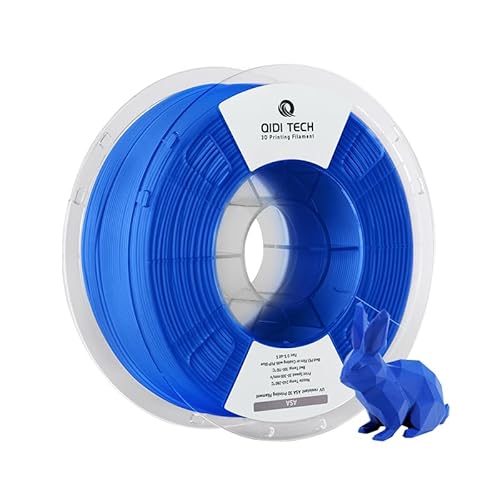
R QIDI Technology 1.75mm ASA Filament
Best for: outdoor functional parts and automotive components
- Material Type
- ASA
- Filament Diameter
- 1.75mm
- Net Weight
- 1kg
- Dimensional Accuracy
- ±0.02mm
- Color
- Blue
- Weight
- 2.2 pounds
View on Amazon: R QIDI Technology 1.75mm ASA Filament Affiliate link
This is a 1kg spool of 1.75mm ASA filament in blue. It offers high UV stability and weather resistance for outdoor parts. The material provides strong mechanical performance with a tensile strength of 47.1 MPa. Dimensional accuracy is held to ±0.02mm for consistent extrusion. You should use this if you need durable, heat-resistant prints that resist yellowing under sunlight.
Pros
- Industry-leading UV and weather resistance for outdoor durability
- High tensile strength of 47.1 MPa for functional parts
- Dimensional accuracy of ±0.02mm for smooth extrusion
- Heat deformation temperature up to 90°C
- Tangle-free mechanical winding and vacuum-sealed packaging
Cons
- Requires an enclosed chamber for best results
- Nozzle temperature must be maintained between 230-250°C
- Bed temperature needs to reach 90-110°C
Good fit if
- You need prints that withstand intense sunlight without fading
- You are creating outdoor functional parts or automotive components
- You require high heat resistance for industrial jigs
Skip if
- You lack an enclosed 3D printer for printing
- You need filament that prints at lower temperatures
- You are making simple decorative items with no exposure to weather
Verdict: QIDI ASA 1.75mm 1kg Filament is ideal for makers who need durable, weather-resistant parts for outdoor or automotive use. It fits users with enclosed printers who require high heat stability and precise dimensional accuracy.
Specifications side by side
| Spec | R QIDI Technology 1.75mm ASA Filament |
|---|---|
| Material Type | ASA |
| Filament Diameter | 1.75mm |
| Net Weight | 1kg |
| Dimensional Accuracy | ±0.02mm |
| Compatible Material | ASA |
| Color | Blue |
| Size | 1.75Mm |
| Weight | 2.2 pounds |
Frequently asked questions
Is this filament suitable for outdoor automotive parts?
Yes, it is ideal for outdoor functional parts and automotive components. ASA offers superior UV stability compared to standard ABS. It resists yellowing and cracking under sunlight. You can trust it for parts exposed to weather. The material maintains its strength and appearance over time in harsh environments.
What is the filament diameter and weight?
The filament has a diameter of 1.75 millimeters. Each spool weighs 2.2 pounds. This size is standard for most FDM printers. The weight indicates a 1kg spool. You get enough material for multiple large prints or many smaller functional parts.
Does this ASA filament come in blue?
Yes, this specific spool is blue. The listing identifies the color as Blue. ASA is available in various colors, but this item is blue. The color does not affect the mechanical properties. You get the same durability and UV resistance regardless of the hue.
Why do I need an enclosed printer for ASA?
You need an enclosed chamber to prevent warping. ASA cools slowly, and drafts cause layer separation. An enclosed environment maintains consistent heat. This ensures precise dimensional accuracy. You avoid failed prints caused by temperature fluctuations in open frames.
What temperature settings should I use?
Set your nozzle between 230 and 250°C. Your bed should reach 90 to 110°C. These high temperatures ensure proper layer adhesion. ASA requires more heat than PLA or PETG. Verify your printer handles these max temperatures before starting.
How does ASA compare to ABS?
ASA provides better UV stability than ABS. It resists yellowing and fading in sunlight. ABS degrades faster when exposed to outdoor elements. Both materials offer strong mechanical properties. Choose ASA if your parts will face weather exposure.