Phrozen Engineering Series Elastic Resin Review: Specs, Pros and Cons
As an Amazon Associate we earn from qualifying purchases. Links on this page are affiliate links.
You are looking at the Phrozen Engineering Series Elastic Resin, a specialized material for resin printing. This 1kg bottle of EL400 elastomer is designed for users who need durable, flexible parts. It is defined by its ultra-high 391% elongation at break and a 50–55 Bayshore rebound rate. These specs mean the printed objects can stretch significantly and snap back to their original shape without damage. If you are searching for a phrozen engineering series 3d printers review to find compatible materials, this resin offers the elasticity required for high-stress applications. It cures at 405nm, fitting standard LCD, DLP, and SLA setups.
What stands out
- 391% elongation at break for extreme flexibility
- 50–55 Bayshore rebound rate for quick shape recovery
- Withstands over 60,000 cycles in tear resistance tests
- 22 kN/m tear strength for durable prototypes
- Compatible with LCD, DLP, and SLA technologies
Who it fits
Good fit for
You should choose this resin if you are printing functional parts that undergo repeated stress. The high elongation and rebound rates make it ideal for shoe cushions, bicycle seats, and other items needing rubber-like performance. It suits users with 405nm LCD, DLP, or SLA printers who need durable prototypes for long-term testing. If your projects involve bending, tearing, or impact, this elastomer provides the stability and reliability required for professional results.
Who should skip it
You should look elsewhere if you need rigid, hard parts for structural components. This material is an elastomer, not a standard rigid resin. It is also not suitable if your printer uses a different curing wavelength than 405nm. Additionally, if you are printing small, intricate miniatures that require high detail rather than flexibility, this thick, rubber-like material may not capture the fine details you need. It is specifically engineered for elasticity, not precision or hardness.
Verdict: This resin delivers exceptional elasticity and tear resistance for demanding functional prints. It is a solid choice for users needing durable, flexible components in compatible 405nm resin printers.
Phrozen EL400 Key Specs Explained
Elongation at break: 391%
This value indicates how much the material can stretch before snapping. A 391% elongation means the resin behaves like rubber, allowing you to print parts that bend significantly without breaking. This is ideal for creating flexible components such as shoe cushions or gaskets. When shopping for flexible filaments or resins, look for high elongation percentages to ensure your prints can withstand stretching and deformation during use.
Rebound rate: 50–55 Bayshore
The rebound rate measures how well the material returns to its original shape after being compressed. A rate of 50–55 Bayshore suggests good resilience, meaning your printed parts will not stay permanently deformed after repeated use. This is crucial for items like bicycle seats or vibration dampeners. Compare this spec with other elastomers to find the best balance between softness and structural recovery for your specific application needs.
Tear strength: 22 kN/m
Tear strength defines the force required to propagate a tear in the material. A rating of 22 kN/m indicates high durability against ripping, especially when tested under bending fatigue conditions. This makes the resin suitable for parts that experience constant flexing and stress. If you need long-lasting prototypes or functional tools, prioritize materials with high tear strength to ensure they survive rigorous handling and repeated mechanical stress.
Curing Wavelength: 405nm
This spec specifies the light frequency required to harden the resin. A 405nm wavelength is standard for most LCD, DLP, and SLA 3D printers. You must ensure your printer supports this wavelength to achieve proper curing. If your machine uses a different frequency, such as 385nm or 405nm with varying intensity, you may need to adjust exposure times. Always verify your printer’s LED array matches this requirement for optimal print quality.
Resin Type: Elastomer
Elastomer refers to a polymer with viscoelasticity, meaning it has both viscosity and elasticity. This type of resin produces flexible, rubber-like parts rather than rigid plastics. It is distinct from standard rigid or tough resins. Choose elastomer resin when you need parts that can absorb shock or flex, such as seals, wheels, or wearable items. This classification helps you select the right material family for projects requiring compliance and impact resistance.
Design and build of EL400 resin
The listing describes the EL400 as an elastomer resin with specific physical dimensions. The bottle measures 3.54 inches in width and length, with a height of 8.86 inches. The net weight is 1 kilogram. This compact footprint allows the container to fit easily into standard storage spaces or printer workstations without taking up excessive room. The packaging is noted as leakproof, which helps maintain material integrity during handling and shipping. You can rely on this design for safe transport and secure storage in your printing environment.
According to the listing, the resin is formulated for 405nm curing wavelengths. It is compatible with LCD, DLP, and SLA printing technologies. This broad compatibility means you can use the material across various resin 3D printer models without needing specialized hardware adjustments. The elastomer formulation targets applications requiring high durability, such as bicycle seats and shoe cushions. The design focuses on functional performance rather than aesthetic finish, prioritizing flexibility and tear resistance for repeated use.
The physical layout of the product is straightforward. You receive the resin in a well-designed bottle that ensures safe delivery. The material’s properties, including its 391% elongation at break, are central to its utility. You should expect parts printed with this resin to exhibit rubber-like elasticity. This makes it suitable for prototypes that undergo bending or tearing. The build quality of the packaging supports the professional support team mentioned in the description, ensuring you have resources available if you encounter printing issues.
Setup and everyday use
Setting up this resin for your printer is straightforward. The EL400 is formulated for 405nm curing wavelengths. This standard wavelength ensures compatibility with most LCD, DLP, and SLA printers. You do not need specialized hardware to use it. The material is packaged in a leakproof bottle. This design helps prevent spills during storage and pouring. The compact dimensions of the container fit easily on most resin tanks or storage shelves. Daily use involves printing parts that require high flexibility. The resin’s ultra-high elasticity allows you to create components that bend without breaking. You can produce items like bicycle seats or shoe cushions. These applications demand materials that withstand repeated stress. The 50–55 Bayshore rebound rate means parts return to their original shape after deformation. This feature supports long-term testing and repeated use. The material also offers high tear resistance. Models printed with EL400 can endure over 60,000 cycles in bending fatigue tests. This durability ensures your prints remain reliable under demanding conditions. You can trust the resin to maintain performance when parts are bent or torn. The 1kg size provides enough material for multiple projects. You receive professional support if you encounter issues during printing. This assistance is available to help you along your 3D printing journey. The resin’s stability ensures consistent results across different print jobs. You can focus on your design without worrying about material failure. The elastomer properties make it suitable for innovative designs that require rubber-like behavior. You get a practical solution for durable prototyping. The combination of flexibility and strength meets high-durability needs. This makes the resin a versatile choice for various engineering applications.
Before you buy EL400 resin
You need to verify your printer supports 405nm UV light. This resin works with LCD, DLP, and SLA machines. Check your build plate adhesion. Flexible elastomers can lift from the plate if the first layer is too thin. You will need a washing station and a UV curing box. Proper post-processing is essential for durability. The EL400 requires thorough washing to remove uncured resin. Incomplete washing weakens the final part. Store the bottle in a cool, dark place. Light exposure degrades the material before you use it. This resin fits best alongside rigid resins in your workflow. Use it for prototypes needing repeated bending. It complements standard resins for parts requiring high tear resistance. Consider your project’s stress points. If you need rubber-like flexibility, this option suits you. If you need hard, brittle parts, look elsewhere. The 1kg size is practical for small batches. Larger projects may require multiple bottles.
Check before you buy
- Confirm your printer uses a 405nm light source.
- Ensure you have a UV curing station ready.
- Check that your build plate handles flexible adhesion.
- Verify you have enough washing solvent for cleanup.
The product at a glance
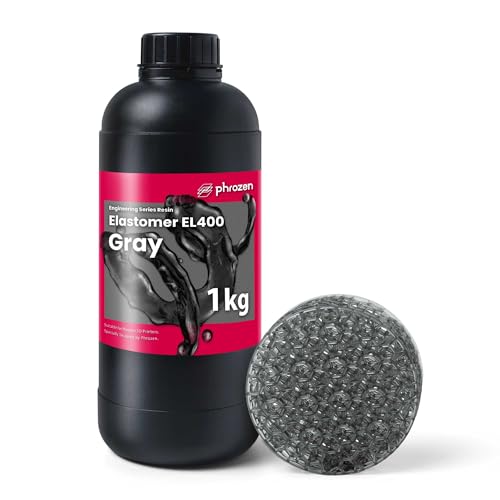
Phrozen Engineering Series Elastic Resin 1kg
Best for: high-elasticity durable prototypes
- Resin Type
- Elastomer
- Curing Wavelength
- 405nm
- Compatible Technology
- LCD, DLP, SLA
- Net Weight
- 1KG
- Application
- Bicycle seats, shoe cushions
- Printing Technology
- Resin
View on Amazon: Phrozen Engineering Series Elastic Resin 1kg Affiliate link
Phrozen EL400 is an elastomer resin designed for high-elasticity prints. It features 391% elongation at break and a 50–55 Bayshore rebound rate. The material withstands over 60,000 tear cycles. It cures at 405nm and works with LCD, DLP, and SLA printers. You get 1kg of resin in a leakproof bottle. This fits users needing durable, flexible prototypes for repeated stress.
Pros
- 391% elongation at break for rubber-like flexibility
- 50–55 Bayshore rebound rate for shape retention
- Withstands over 60,000 cycles in tear tests
- Compatible with LCD, DLP, and SLA technologies
Cons
- Limited to 405nm curing wavelength
- Only 1kg net weight per bottle
- Specific to elastomer applications like shoe cushions
Good fit if
- You need flexible parts that return to their original shape
- You print with LCD, DLP, or SLA machines
- You require materials that survive repeated bending
Skip if
- You require rigid or hard plastic prints
- You use printers that do not support 405nm light
- You need large batch volumes beyond 1kg
Verdict: Phrozen EL400 Elastomer Resin delivers high elasticity and tear resistance for demanding flexible prints. It suits engineers and designers who need durable prototypes that withstand repeated stress and deformation.
Specifications side by side
| Spec | Phrozen Engineering Series Elastic Resin 1kg |
|---|---|
| Resin Type | Elastomer |
| Curing Wavelength | 405nm |
| Compatible Technology | LCD, DLP, SLA |
| Net Weight | 1KG |
| Application | Bicycle seats, shoe cushions |
| Printing Technology | Resin |
| Features | Low Shrinkage, Non-Brittle |
| Size | 1KG |
| Dimensions | 3.54 × 3.54 × 8.86 inches |
| Weight | 1 kilograms |
| Color | EL400 |
Frequently asked questions
Is Phrozen Engineering Series Elastic Resin compatible with my resin printer?
Yes, it works with most resin printers. The EL400 resin cures at a standard 405nm wavelength. This means it fits LCD, DLP, and SLA machines. You do not need specialized hardware to use it. Just verify your printer supports this specific UV light range for proper curing.
What is the best use case for this elastic resin?
It is best for high-elasticity durable prototypes. The material offers high tear resistance for flexible prints. Engineers and designers use it for parts that withstand repeated stress. It is ideal for components that need to bend significantly without breaking, such as shoe cushions or flexible seals.
How much resin comes in a single bottle?
Each bottle contains 1 kilogram of material. The product listing specifies a net weight of 1kg. The packaging measures 3.54 inches in width and length, with a height of 8.86 inches. This compact size fits standard storage spaces while providing enough material for multiple flexible print jobs.
Does this resin behave like rubber during printing?
Yes, it behaves like rubber after curing. The EL400 is an elastomer resin designed for flexibility. It allows you to print parts that bend significantly. This makes it suitable for creating durable prototypes that require high elasticity and can handle deformation without snapping under pressure.
What color is the Phrozen EL400 resin?
The resin is identified as EL400 in the product data. The specific visual color is not listed in the provided specifications. You should check the manufacturer's images for the exact hue. The material is formulated as an elastomer for engineering applications requiring durable and flexible outputs.
Can I use this resin for complex flexible geometries?
Yes, it supports complex flexible geometries. The high elongation at break allows for significant stretching. You can print parts that undergo repeated stress and deformation. This makes it suitable for intricate designs that require both structural integrity and high flexibility, such as wearable tech components or soft robotics.