Heygears Dual-Wavelength Resin Curing Machine vs Heygears Reflex Pulsing Release Module: Spec Comparison
As an Amazon Associate we earn from qualifying purchases. Links on this page are affiliate links.
This guide compares the heygears resin curing machine vs pulsing release module heated. Both tools support resin 3D printing workflows but serve different stages. The curing machine handles post-processing by hardening finished parts with UV light and heat. The pulsing release module is a hardware upgrade for the printer itself. It modifies the resin tank to reduce peeling force during printing. You need to decide if you want faster prints or better post-processing results.
Key differences
| Aspect | HeyGears Dual-Wavelength Resin Curing Machine | HeyGears Reflex Pulsing Release Module and Tank Kit |
|---|---|---|
| Printing Technology | Resin | Resin |
| Primary Function | Post-processing UV curing station | Print head tank modification |
| Heating Capability | Adjustable heating up to 80C | Not listed |
| Print Speed Impact | Not listed | Up to 20% faster printing |
| Curing Volume | 198 x 124 x 220 mm | Not listed |
| Wavelengths | 365nm and 405nm | Not listed |
Which one should you choose?
Choose HeyGears Dual-Wavelength Resin Curing Machine if
- You need to cure large batches of prints uniformly
- You want to use heat to optimize resin hardness
- You require a standalone station for post-processing
Choose HeyGears Reflex Pulsing Release Module and Tank Kit if
- You want to increase printing speed by 20%
- You wish to reduce support material usage by 25%
- You print high-performance resins like PAC10 or PAU20
Verdict: Choose the curing machine if your priority is efficient post-processing with uniform UV exposure and heat. Choose the pulsing release module if you want to speed up the printing process and reduce support structures. The module is a printer upgrade, while the machine is a separate post-processing tool.
Curing Machine vs Release Module Specs
Primary Function
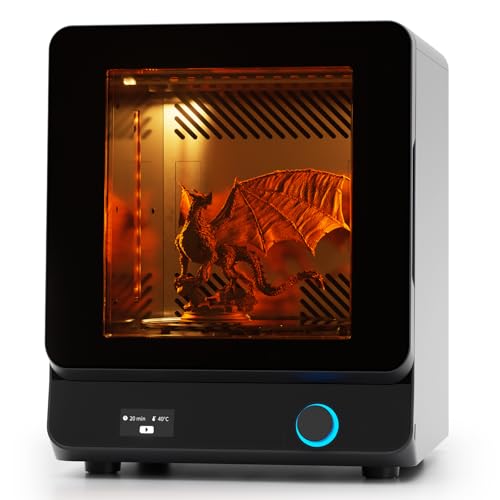
The HeyGears Dual-Wavelength Resin Curing Machine is designed for post-processing. It uses UV light and heat to harden finished 3D prints. The machine features a rotating turntable and multi-directional UV arrays to ensure even curing. In contrast, the HeyGears Reflex Pulsing Release Module is a hardware component for the printer itself. It attaches to the resin tank to reduce peeling force. This module helps the print head separate from the film more easily during the printing process. One tool cures parts; the other assists in creating them.
Compatibility
The curing machine supports a wide range of HeyGears printers. It works with the Reflex Series, Reflex RS, RS Turbo, Reflex 2, and Reflex 2 Pro. It also fits other resin printers. The pulsing release module is more specific. It is designed for the Reflex RS Turbo and Reflex RS printers. It is required for high-performance resins like PAC10, PAE10, and PAU20. However, it is not compatible with PAWW10 and PAWW20 water-washable resins. If you use a printer outside these models, the module will not fit.
Build Volume
The curing machine has a generous curing volume of 198 x 124 x 220 mm. This equals approximately 7.79 x 4.88 x 8.66 inches. This space allows you to cure large models or batch-produce multiple small parts at once. The pulsing release module does not have a build volume because it is not a printing chamber. It is an accessory for the resin tank. The data does not list dimensions for the module kit. The curing machine clearly offers more physical space for handling parts.
Print Speed Impact
The pulsing release module directly affects printing speed. By reducing peeling force by approximately 50%, it can offer up to 20% faster printing speeds with specific resins like PAU10. This allows for shorter curing-to-release intervals. The curing machine does not increase the speed of the printing process. It is used after printing is complete. It hardens the surface and ensures deeper hardening. While it improves part quality, it does not speed up the creation of the model itself.
Heating Capabilities
Both products involve heat, but in different ways. The curing machine offers adjustable heating up to 80C. This helps optimize curing performance based on the resin type. It ensures stronger, more stable results and prevents warping. The pulsing release module is described as a heated kit. It uses periodic inflation and deflation to manage pressure. The data does not specify a temperature limit for the module. The curing machine provides explicit temperature control for post-processing.
Support Reduction
The pulsing release module helps reduce the need for supports. By minimizing stress on delicate structures, it allows you to design with up to 25% fewer supports. This leads to cleaner surfaces and easier support removal. The curing machine does not affect support usage. It is used after the print is finished. It does not influence the design phase or the printing stability during layer creation. The module offers a clear advantage in reducing material and labor for supports.
Choose based on workflow stage
Users needing post-curing for large batches
You need to harden finished prints efficiently. This machine offers a large volume of 198 x 124 x 220 mm. It uses dual-wavelength UV light at 365nm and 405nm for deep, uniform curing. The auto-rotating turntable ensures shadow-free results. You can also apply heat up to 80C to optimize resin performance. This setup handles batch production with consistent quality.
Printers wanting faster layer release and less stress
You want to reduce peeling force during printing. This module lowers resistance by approximately 50% using periodic inflation. This allows for up to 20% faster print speeds. You will also use 25% fewer supports, saving material and time. It is essential for high-performance resins like PAC10. Note that it is not compatible with water-washable resins.
Operators seeking automated curing workflows
You prefer a seamless transition from slicing to curing. This device integrates with Blueprint Studio for automatic task assignment. It intelligently matches curing profiles to model types. The multi-directional UV array prevents deformation and brittleness. You get cleaner surface details and stronger models without manual setup. It works with various HeyGears Reflex series printers.
The products compared
HeyGears Dual-Wavelength Resin Curing Machine
Best for: large, complex resin prints
- Printing Technology
- Resin
- Dimensions
- 14.5 × 15 × 18 inches
- Weight
- 26.5 pounds
View on Amazon: HeyGears Dual-Wavelength Resin Curing Machine Affiliate link
This HeyGears station cures resin using 365nm and 405nm UV light. The dual wavelengths speed up surface curing while ensuring deep, warp-free hardening. It features an auto-rotating turntable for shadow-free exposure and heats up to 80C. The 198 x 124 x 220 mm volume fits large prints. It suits users seeking consistent results for complex resin models.
Pros
- Dual 365nm and 405nm UV wavelengths for faster, deeper curing
- Auto-rotating turntable ensures 360-degree shadow-free exposure
- Adjustable heating function reaches up to 80C
- Large 198 x 124 x 220 mm curing volume
Cons
- Heavier build at 26.5 pounds
- Larger footprint compared to compact units
- Requires compatible HeyGears software for automatic settings
Good fit if
- You print complex models requiring uniform curing
- You need heated curing for specific resin types
- You work with large resin prints
Skip if
- You need a portable curing station
- You only use standard UV curing without heat
- You prefer manual control over automated profiles
Verdict: HeyGears Dual-Wavelength Resin Curing Machine delivers precise, heated curing for large, complex resin prints. It fits users who prioritize uniform results and automated workflows over compact size.
HeyGears Reflex Pulsing Release Module and Tank Kit
Best for: High-performance resin printing on Reflex RS printers
- Printing Technology
- Resin
- Color
- Grey
View on Amazon: HeyGears Reflex Pulsing Release Module and Tank Kit Affiliate link
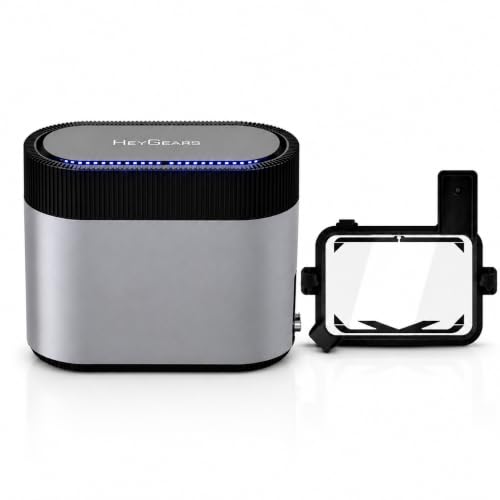
The HeyGears Pulsing Release Module is a resin tank add-on for Reflex RS Turbo and RS printers. It uses periodic inflation and deflation to cut peeling force by 50%. This reduces release resistance, allowing up to 20% faster print speeds. You also save material by using 25% fewer supports. It works with most HeyGears resins but requires specific high-performance types like PAC10. It is not compatible with water-washable options.
Pros
- Reduces peeling force by 50% via periodic pressure cycles
- Enables up to 20% faster print speeds with compatible resins
- Allows 25% fewer supports to save material and improve surfaces
- Required for PAC10, PAE10, and PAU20 high-performance resins
Cons
- Not compatible with PAWW10 and PAWW20 water-washable resins
- Not recommended for delicate models with walls 3mm or less
- Requires specific resin types to unlock full mechanical potential
Good fit if
- You print with high-performance resins like PAC10 or PAU20
- You want to reduce support usage and material waste
- You use a Reflex RS or RS Turbo printer
Skip if
- You primarily use water-washable resins
- You print delicate models with thin walls under 3mm
- You do not own a compatible HeyGears Reflex printer
Verdict: HeyGears Pulsing Release Module is essential for Reflex RS users printing high-performance resins, offering faster cycles and less support material. It is not suitable for water-washable resins or very thin-walled models.
Specifications side by side
| Spec | HeyGears Dual-Wavelength Resin Curing Machine | HeyGears Reflex Pulsing Release Module and Tank Kit |
|---|---|---|
| Printing Technology | Resin | Resin |
| Color | not stated | Grey |
| Dimensions | 14.5 × 15 × 18 inches | not stated |
| Weight | 26.5 pounds | not stated |
Frequently asked questions
Can I use the reflex pulsing release module with any resin printer?
No, it is not universal. The HeyGears Reflex Pulsing Release Module is designed specifically for Reflex RS printers. It is not suitable for water-washable resins or very thin-walled models. You must ensure your printer is the Reflex RS series to use this module effectively for high-performance resins.
Does the curing machine support different UV wavelengths?
Yes, it uses dual-wavelength technology. The HeyGears Dual-Wavelength Resin Curing Machine operates at 365nm and 405nm. This allows for deep and uniform curing of finished prints. It is particularly useful for large, complex resin prints that require precise and consistent hardening across all surfaces.
What are the physical dimensions of the curing machine?
The unit measures 15 inches in width, 18 inches in height, and 14.5 inches in length. It weighs 26.5 pounds. These dimensions indicate a substantial footprint. You need adequate space on your workbench to accommodate this size for efficient post-processing of large batches.
Is the pulsing release module a standalone printer?
No, it is an accessory module. The HeyGears Reflex Pulsing Release Module and Tank Kit is a hardware add-on, not a complete printer. It is essential for Reflex RS users printing high-performance resins. It helps offer faster cycles and reduces the amount of support material needed.
Which product is better for post-processing finished parts?
The curing machine is the correct choice for post-processing. The HeyGears Dual-Wavelength Resin Curing Machine handles the hardening of finished parts using UV light and heat. The pulsing release module is used during the printing phase to assist with part release, not for curing completed objects.
Does the curing machine have a rotating turntable?
Yes, it features a rotating turntable. This component ensures even curing by exposing all sides of the print to UV light. Combined with multi-directional UV arrays, it helps achieve uniform results. This is vital for users who prioritize consistent quality in large and complex resin prints.
Can I use the pulsing module for water-washable resins?
No, it is not suitable for that resin type. The HeyGears Reflex Pulsing Release Module is intended for high-performance resins. It is explicitly not recommended for water-washable resins. Using it with incompatible materials may lead to poor results or damage to the module.