FLASHFORGE vs ANYCUBIC: 3d Printing Filaments Compared by Specs
As an Amazon Associate we earn from qualifying purchases. Links on this page are affiliate links.
This comparison looks at FLASHFORGE vs ANYCUBIC 3d printing filament options for PLA. Both brands offer 1.75mm PLA with tight dimensional accuracy of +/- 0.02mm. They share similar core material properties and weight. The main difference lies in their speed capabilities and smart features. Flashforge supports high-speed printing up to 500mm/s. Anycubic focuses on intelligent identification for specific printer ecosystems.
Key differences
| Aspect | Flashforge High Speed PLA Filament 1kg | ANYCUBIC 1.75mm Black PLA Filament (1kg) |
|---|---|---|
| Material Type | PLA | PLA |
| Filament Diameter | 1.75mm | 1.75mm |
| Max Print Speed | 500mm/s | not listed |
| Dimensional Accuracy | +/- 0.02 mm | +/- 0.02mm |
| Smart Features | not listed | Intelligent identification chip |
| Color Options | Black, Burnt Titanium, Natural, White, Ruby Red, Purple, Pearl Gentian Blue, Iron Grey | Black, Texture Grey, White, Glow in the Dark - Glow to Blue, Glow in the Dark - Glow to Green |
Which one should you choose?
Choose Flashforge High Speed PLA Filament 1kg if
- You need high-speed printing up to 500mm/s
- You want color-changing materials like Burnt Titanium
- You prefer robust tangle-smooth extrusion technology
Choose ANYCUBIC 1.75mm Black PLA Filament (1kg) if
- You use an ACE Pro or compatible ecosystem
- You want automatic identification of printing information
- You are interested in glow-in-the-dark options
Verdict: Choose Flashforge if you prioritize high-speed printing and unique visual effects. Select Anycubic if you value smart identification features for streamlined workflows. Both provide reliable PLA with consistent dimensions for standard prints.
Flashforge vs Anycubic PLA Specs
print speed
Flashforge High Speed PLA supports maximum print speeds of up to 500 mm/s. This allows for fast melting and even flow, which accelerates production while maintaining high-quality results. The filament is specifically engineered for rapid extrusion. In contrast, the data for Anycubic PLA does not list a specific maximum print speed. It notes general compatibility with mainstream printers and various speeds, but provides no numerical limit. If you prioritize raw speed and rapid output, Flashforge offers a clear advantage with its stated 500 mm/s capability. Anycubic remains a standard option without highlighted speed metrics.
smart features
Anycubic PLA includes intelligent identification chips that integrate with the ACE Pro system. These chips allow for automatic identification of printing information, enhancing the user experience through automation. Flashforge data does not mention any smart chips or digital integration features. It focuses instead on physical properties like winding technology and dimensional consistency. For users with compatible Anycubic hardware, this automation reduces manual input. Flashforge relies on traditional mechanical reliability. If you value automated material recognition, Anycubic has the edge. Otherwise, Flashforge provides a standard, chip-free experience.
color options
Flashforge offers a diverse range of color variations, including Black, White, Natural, Ruby Red, Purple, Pearl Gentian Blue, Iron Grey, and a unique Burnt Titanium. This color-changing material reacts to different light intensities, hiding layer lines for visual effects. Anycubic also provides multiple colors, such as Black, White, Texture Grey, and Glow in the Dark variants. Both brands support standard black. However, Flashforge’s Burnt Titanium offers a specialized aesthetic feature not found in the Anycubic list. If you want unique, light-reactive finishes, Flashforge wins. For standard or glowing options, both are viable, but Flashforge has the broader unique palette.
dimensional accuracy
Both Flashforge and Anycubic PLA filaments maintain a strict filament diameter of 1.75 mm. Each brand guarantees a dimensional accuracy of +/- 0.02 mm. Flashforge achieves this through CCD diameter measurement and adaptive control, ensuring a 99% probability of consistency. Anycubic notes that this tolerance ensures smooth outflow and homogeneous printing. Both products deliver identical precision specifications. This consistency prevents feed rate disruptions and ensures stable layer fusion. Since the numerical tolerance is the same for both, there is no technical difference in accuracy. You can expect similar print quality regarding diameter consistency from either brand.
material weight
Flashforge High Speed PLA is available in a 1 kg net weight package. Anycubic PLA is also offered in a 1 kg net weight configuration. Both products provide the same amount of material per spool. This standard weight is suitable for most desktop 3D printers. There is no difference in the quantity of filament provided by either brand in their primary offerings. You get equivalent volume for your printing needs. The comparison here is straightforward, as both brands align on the standard 1 kg spool size, making them equal in terms of material volume.
compatibility
Anycubic PLA is designed for compatibility with a wide range of temperatures and printing speeds, making it suitable for most mainstream 3D printers on the market. It emphasizes broad usability across different hardware. Flashforge High Speed PLA is optimized for high-speed printing, which may require specific printer capabilities to fully utilize the 500 mm/s speed. While likely compatible with many machines, its primary design focus is on speed performance rather than broad, generic compatibility claims. If you have a varied or older printer setup, Anycubic’s broad compatibility claim offers peace of mind. Flashforge is best for printers capable of high-speed operation.
Which filament suits your workflow
Users with high-speed printers
Choose Flashforge if your machine supports rapid extrusion. This filament allows speeds up to 500 mm/s with even flow. It eliminates tangles and ensures consistent 1.75mm dimensions. You get stable first layers and excellent bridging without needing to pre-dry the material. It is built for acceleration and smooth operation at high rates.
Anycubic ACE Pro owners
Select Anycubic if you use the ACE Pro system. Its intelligent identification chips integrate seamlessly for automatic data recognition. The filament is vacuum sealed with desiccants and dried for 24 hours. It features a large spool inner diameter for smooth feeding. You benefit from clog-free performance and consistent layer fusion with minimal stringing.
Printers prioritizing color effects
Pick Flashforge for unique visual results. It offers a Burnt Titanium option that changes color based on light intensity. Special pigments hide layer lines effectively. This allows you to create stunning visual effects in your prints. The material maintains precise dimensions while delivering robust performance and high-quality surface finishes for artistic projects.
The products compared
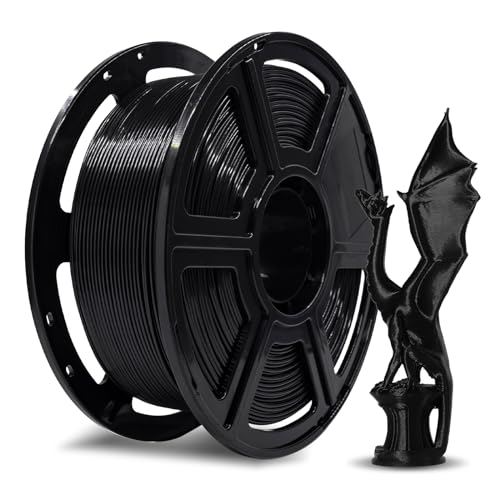
Flashforge High Speed PLA Filament 1kg
Best for: fast printing with consistent quality
- Material Type
- PLA
- Filament Diameter
- 1.75mm
- Net Weight
- 1kg
- Max Print Speed
- 500mm/s
- Dimensional Accuracy
- +/- 0.02 mm
- Features
- High Speed
View on Amazon: Flashforge High Speed PLA Filament 1kg Affiliate link
This FLASHFORGE filament is a 1.75 mm PLA designed for high-speed printing up to 500 mm/s. It features precise dimensional accuracy of +/- 0.02 mm and uses improved winding to reduce tangles. The material offers excellent bed adhesion without pre-drying. You will get consistent extrusion and stable first layers. It is ideal for users who want to accelerate production while maintaining clean, precise prints.
Pros
- Supports print speeds up to 500 mm/s
- Dimensional accuracy of +/- 0.02 mm
- Improved winding reduces tangles and blockages
- No pre-drying required for stable bed adhesion
Cons
- Limited to PLA material type
- 1 kg spool capacity may require frequent reloading
- No mention of vacuum-sealed packaging for moisture protection
Good fit if
- You need fast printing speeds up to 500 mm/s
- You want consistent diameter for clean extrusion
- You prefer ready-to-use filament without pre-drying
Skip if
- You require high-temperature materials like ABS
- You need large spools for long unattended prints
- You prioritize moisture-resistant packaging
Verdict: FLASHFORGE High Speed PLA 1.75mm is a reliable option for users who prioritize speed and consistency. It suits those who want to print faster without sacrificing layer quality or dealing with pre-drying.

ANYCUBIC 1.75mm Black PLA Filament (1kg)
Best for: ANYCUBIC ACE Pro users
- Material Type
- PLA
- Filament Diameter
- 1.75mm
- Net Weight
- 1kg
- Dimensional Accuracy
- +/- 0.02mm
- Printing Technology
- FDM
- Dimensions
- 8.23 × 8.23 × 1.77 inches
View on Amazon: ANYCUBIC 1.75mm Black PLA Filament (1kg) Affiliate link
This ANYCUBIC PLA filament uses a 1.75mm diameter with a dimensional tolerance of +/- 0.02mm for consistent layer fusion. It weighs 1KG and includes an intelligent identification chip for ACE Pro compatibility. The material dries for 24 hours before vacuum sealing to prevent clogs. You get smooth feeding and minimal stringing with this standard black PLA roll.
Pros
- 1.75mm diameter with +/- 0.02mm tolerance
- 1KG net weight per spool
- Intelligent identification chip for ACE Pro
- 24-hour drying and vacuum sealing
Cons
- Limited to PLA material type
- No compatibility data for non-ANYCUBIC printers
- Black color only in this listing
Good fit if
- You use an ANYCUBIC ACE Pro system
- You need precise dimensional accuracy
- You want clog-free PLA prints
Skip if
- You require ABS or PETG materials
- You need multi-color automatic mixing
- You prefer larger spool weights
Verdict: ANYCUBIC PLA 1.75mm 1KG suits users needing precise tolerances and ACE Pro integration. It delivers consistent results for standard PLA projects.
Specifications side by side
| Spec | Flashforge High Speed PLA Filament 1kg | ANYCUBIC 1.75mm Black PLA Filament (1kg) |
|---|---|---|
| Material Type | PLA | PLA |
| Filament Diameter | 1.75mm | 1.75mm |
| Net Weight | 1kg | 1kg |
| Max Print Speed | 500mm/s | not stated |
| Dimensional Accuracy | +/- 0.02 mm | +/- 0.02mm |
| Printing Technology | not stated | FDM |
| Compatible Material | PLA | PLA |
| Print Speed | 500mm/s | not stated |
| Features | High Speed | not stated |
| Color | Black | 1kg Pla Black |
| Size | 1kg High Speed PLA | 1.75Mm |
| Weight | 2.2 pounds | 3.53 ounces |
| Dimensions | not stated | 8.23 × 8.23 × 1.77 inches |
| Model | High Speed | not stated |
Frequently asked questions
Is Flashforge PLA better for fast printing?
Yes, if speed is your priority. The Flashforge High Speed PLA supports print speeds up to 500 mm/s. This allows for rapid extrusion and even flow. You get consistent quality without sacrificing layer adhesion. It is engineered specifically for users who want to accelerate production while maintaining reliable results.
Does Anycubic filament work with ACE Pro printers?
It is optimized for that system. The Anycubic PLA 1.75mm is designed to integrate seamlessly with the ACE Pro. This ensures precise tolerances and consistent results. If you own an ACE Pro, this filament provides a reliable option for standard PLA projects with minimal setup adjustments.
What is the filament diameter for these brands?
Both brands use 1.75mm diameter filament. This is the standard size for most desktop 3D printers. The Flashforge and Anycubic options both maintain tight dimensional accuracy of +/- 0.02mm. This consistency helps prevent clogs and ensures smooth feeding through your extruder gear.
Is Flashforge PLA pre-dried?
The product description does not specify pre-drying. It highlights high-speed capabilities and consistent quality instead. You may need to check the packaging or manufacturer guidelines for moisture content details. Proper storage is always recommended to maintain filament performance regardless of initial drying status.
How much PLA do you get per spool?
Both products are listed as 1kg spools. The Flashforge option weighs 2.2 pounds. The Anycubic spool weighs 3.53 ounces according to its specs, which seems inconsistent with the 1kg label. You should verify the actual weight on the packaging for accurate planning.
Can I use these filaments for bridging?
Yes, both are suitable for bridging tasks. The Flashforge PLA is noted for excellent bridging performance. Its even flow helps create clean overhangs. The Anycubic filament also delivers consistent results for standard projects. Both materials handle moderate spans well when printed at appropriate speeds.