3DimsFila PLA/PETG Rock Stone Filament Review: Specs, Pros and Cons
As an Amazon Associate we earn from qualifying purchases. Links on this page are affiliate links.
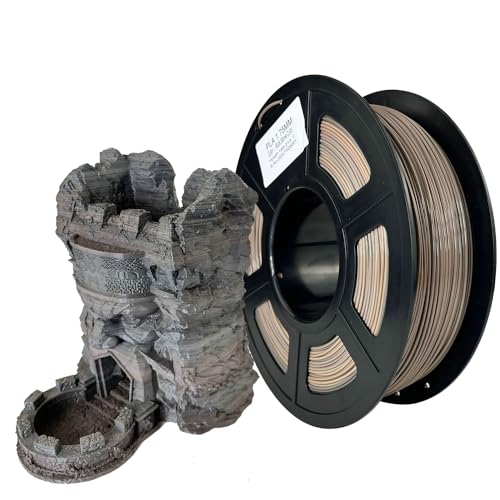
This 3dimsfila 3d printer pla filament review focuses on a unique material that blends PLA and PETG. The 1.75 mm diameter ensures compatibility with most modern printers, while the 1 kg net weight provides a standard supply for your projects. The Rock Stone colorway uses a co-extrusion process to create a core-shell structure. This method embeds black elements within sand yellow and brown hues, resulting in a distinct layered shadow effect. You get a vacuum-sealed package with silica desiccant to maintain filament integrity during storage.
What stands out
- Co-extruded core-shell structure with PETG core and PLA shell
- Multi-color Rock Stone finish with intermittent black shadow layers
- 1.75 mm diameter with triple feedback diameter control
- Vacuum-sealed packaging with silica desiccant for moisture protection
- Wide processing range supporting speeds up to 300 mm/s
Who it fits
Good fit for
You should choose this filament if you want textured, natural-looking prints without post-processing. The PETG core offers strength, while the PLA shell provides ease of printing. It suits users who appreciate the Rock Stone aesthetic and need reliable layer adhesion. The wide nozzle temperature range of 195-220°C allows flexibility in your setup. If you print decorative objects or prototypes that mimic stone or wood, this multi-color blend delivers consistent results with minimal stringing.
Who should skip it
You might want to look elsewhere if you prefer solid, uniform colors for your models. This filament’s co-extruded design creates a specific multi-color pattern that cannot be customized per layer. If you require precise color matching for functional parts, the random distribution of black elements may be distracting. Additionally, if your printer struggles with high speeds, note that while it supports up to 300 mm/s, optimal quality often requires slower settings. Users needing pure PLA without PETG components should also avoid this blend.
Verdict: This filament offers a distinctive stone-like appearance with robust printing characteristics. It is a solid choice for decorative prints where texture and color variation are desired.
Key specs explained for this filament
Filament Diameter: 1.75 mm
This is the standard width for most desktop 3D printers. You can load this filament into nearly any machine without needing adapters. The listing notes a triple feedback mechanism ensures consistent roundness. This consistency helps prevent clogs and ensures smooth feeding into your extruder, making it a safe choice for beginners and experts alike.
Material Type: PLA, PETG
This filament uses a core-shell structure with a PETG core and PLA shell. The PETG core adds strength and heat resistance, while the PLA shell provides easy printing and a smooth finish. You get the durability of PETG with the user-friendly nature of PLA. This hybrid approach helps reduce warping and improves layer adhesion compared to standard PLA alone.
Net Weight: 1 kg
Each spool contains exactly one kilogram of material. This is the industry standard amount, allowing you to calculate material usage accurately for your projects. The listing specifies vacuum sealing and silica desiccant to keep the filament dry during storage. This weight ensures you have enough supply for multiple medium-sized prints without running out unexpectedly.
Max Print Speed: 300 mm/s
The manufacturer recommends a speed range up to 300 mm/s. This allows you to print faster than standard PLA filaments, which often struggle above 100 mm/s. You can reduce print times for non-critical parts while maintaining quality. Just ensure your printer hardware can handle these speeds and adjust retraction settings to prevent stringing at higher velocities.
Design and build details
The listing describes a hybrid construction using a co-extrusion process. The core is PETG, while the outer shell is PLA. This core-shell structure creates a distinct multi-color effect. You will see black stripes appearing layer by layer over the sand yellow and brown hues. The black components provide a shadow-like contrast to the warmer tones. This design choice means you get visual depth without needing complex slicer settings for color changes.
According to the listing, the filament maintains a strict 1.75 mm diameter. The manufacturer uses a triple feedback mechanism to ensure roundness. This consistency reduces the risk of clogs and ensures smooth feeding into your extruder. The net weight is 1 kg, which is standard for most desktop printers. The spool comes vacuum-sealed with silica desiccant. This packaging protects the material from moisture during storage, which is critical for PLA and PETG blends.
The finish relies on the material layers themselves. The PETG core likely adds toughness, while the PLA shell provides the detailed surface texture. You should expect minimal stringing and warping based on the listed specifications. The wide processing temperature range allows flexibility in your printer settings. This build approach targets users who want aesthetic variety without sacrificing structural reliability. The design prioritizes consistent diameter and strong layer adhesion for reliable prints.
Setup and everyday use
Loading this filament is straightforward. You secure the end in the spool’s designated hole to prevent tangling during feeding. The vacuum-sealed packaging includes silica desiccant, which helps maintain dryness until you open the bag. The zipper closure allows you to reseal the spool for future use.
Printer settings require specific adjustments for optimal results. You should set the heated bed temperature between 50°C and 60°C. The nozzle temperature range is wider, spanning from 195°C to 220°C. This flexibility allows you to tune the print quality based on your printer’s capabilities.
Speed and retraction settings are critical for this material. You can print at speeds between 25 mm/s and 300 mm/s. The listing recommends retraction lengths of 3 to 5 mm and speeds of 40 to 50 mm/s. These values help minimize stringing, which is common with PLA-based filaments.
For slicer configurations, a support flow of 70% and a Z-top distance of 0.3 mm are advised. The triple diameter feedback mechanism ensures consistent roundness, reducing the risk of clogs. This consistency supports strong layer adhesion and minimal warping during everyday use. The material is free from impurities, which contributes to a smooth extrusion process. You can rely on the 1.75 mm diameter to fit standard extruders without modification. The hybrid PLA/PETG core-shell structure requires no special cooling settings beyond standard PLA profiles. Just ensure the filament path is clear of tangles before starting your print job.
What To Check Before Buying
Before you buy this filament, verify your printer’s nozzle material. While PLA and PETG are common, some older metal nozzles may wear faster with abrasive additives. The listing recommends a nozzle temperature between 195°C and 220°C. Ensure your extruder can handle this range without slipping. You should also check your bed adhesion method. The guide suggests 50°C to 60°C for the heated bed. Peels, glue sticks, or tapes work well here. Keep the spool in a dry place after opening. Although it comes vacuum-sealed with desiccant, humidity affects PLA quickly. Store it in a sealed container with fresh drying beads. This hybrid material sits between standard PLA and stronger PETG. It offers unique visuals but may require slower prints for best layer bonding. If you need high strength for functional parts, stick to pure PETG. For decorative models, this Rock Stone option adds texture. It fits well in a multi-material workflow. Just ensure your slicer profiles match the recommended speeds and retraction settings to avoid stringing or clogs.
Check before you buy
- Confirm nozzle material compatibility with PLA/PETG hybrid.
- Verify heated bed reaches 50-60°C for adhesion.
- Ensure slicer supports 195-220°C nozzle temperatures.
- Prepare dry storage container with desiccant after opening.
The product at a glance
3DimsFila PLA/PETG Rock Stone Filament
Best for: unique multi-color rock stone textures
- Material Type
- PLA, PETG
- Filament Diameter
- 1.75 mm
- Net Weight
- 1 kg
- Max Print Speed
- 300 mm/s
- Color Printing
- Multi-Color
- Size
- 1.75Mm
View on Amazon: 3DimsFila PLA/PETG Rock Stone Filament Affiliate link
This 1.75 mm filament uses a PETG core and PLA shell to create a multi-color rock stone effect. It supports print speeds up to 300 mm/s and weighs 1 kg per spool. The vacuum-sealed packaging includes a desiccant to protect the material. You get consistent diameter control and minimal stringing. This option suits users seeking unique visual textures without complex post-processing.
Pros
- Co-extruded PETG core with PLA shell for distinct layer effects
- Multi-color design with sand yellow, brown, and black elements
- Max print speed of 300 mm/s
- Vacuum-sealed with silica desiccant for storage
Cons
- Complex co-extrusion structure may limit material recyclability
- Specific Cura settings required for optimal results
- No included filament spool holder or tensioner
Good fit if
- You want unique visual textures without painting
- You need high-speed printing capabilities
- You value vacuum-sealed storage for freshness
Skip if
- You prefer single-material uniformity
- You need a wider color palette
- You require pre-loaded slicer profiles
Verdict: 3DimsFila Rock Stone PLA/PETG Filament delivers a striking multi-color finish with high-speed support. It fits users who prioritize visual impact and reliable diameter consistency.
Specifications side by side
| Spec | 3DimsFila PLA/PETG Rock Stone Filament |
|---|---|
| Material Type | PLA, PETG |
| Filament Diameter | 1.75 mm |
| Net Weight | 1 kg |
| Max Print Speed | 300 mm/s |
| Color Printing | Multi-Color |
| Compatible Material | PLA |
| Size | 1.75Mm |
| Weight | 2.2 pounds |
| Color | Flt-pla-rock-brown-yellow-black |
Frequently asked questions
Is this filament compatible with standard 3D printers?
Yes, the 3DimsFila Rock Stone filament uses a 1.75 mm diameter. This is the standard size for most desktop 3D printers. You can load it into nearly any machine without needing adapters. The listing notes a triple feedback mechanism ensures consistent roundness, which helps prevent feeding issues.
What materials are used in this hybrid filament?
This filament features a hybrid construction using a co-extrusion process. The core is made of PETG, while the outer shell is PLA. This core-shell structure creates a distinct multi-color effect. You will see black stripes appearing layer by layer over the sand yellow base color.
What is the recommended printing temperature range?
The listing recommends a nozzle temperature between 195°C and 220°C. You should ensure your extruder can handle this range without slipping. While PLA and PETG are common, some older metal nozzles may wear faster with abrasive additives, so verify your printer’s nozzle material before starting.
How much filament is on each spool?
Each spool contains 1 kg of material. The total weight is listed as 2.2 pounds, which includes the spool packaging. This standard supply is sufficient for many projects. The specific colorway is identified as Flt-pla-rock-brown-yellow-black, providing a unique rock stone texture.
Does the packaging help keep the filament dry?
Yes, the filament comes in vacuum-sealed packaging. It includes silica desiccant to help maintain dryness until you open the bag. The zipper closure allows you to reseal the package after use. This helps prevent moisture absorption, which can cause printing defects like bubbling or stringing.
What visual effect does this filament produce?
It delivers a striking multi-color finish with a rock stone texture. The design creates a unique look with black stripes over a sand yellow background. This visual impact is the primary reason users choose this material. It is ideal for prints where aesthetics are a priority.